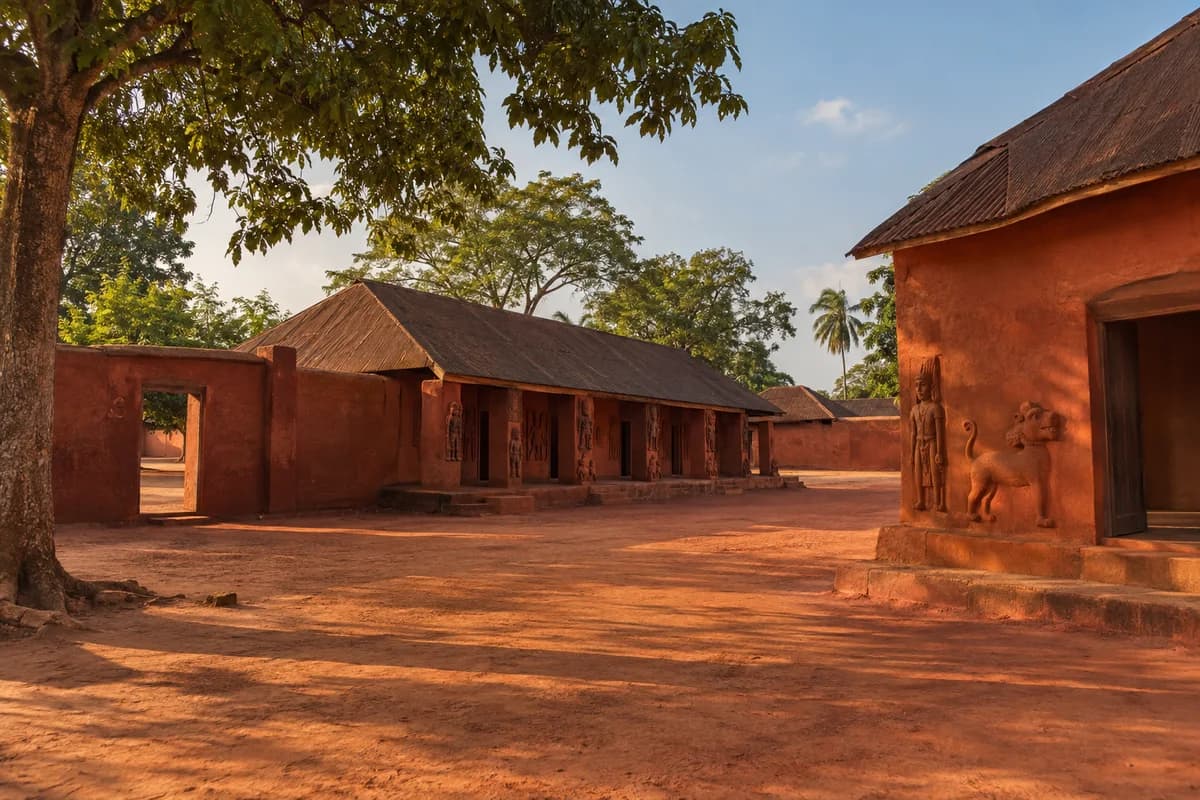
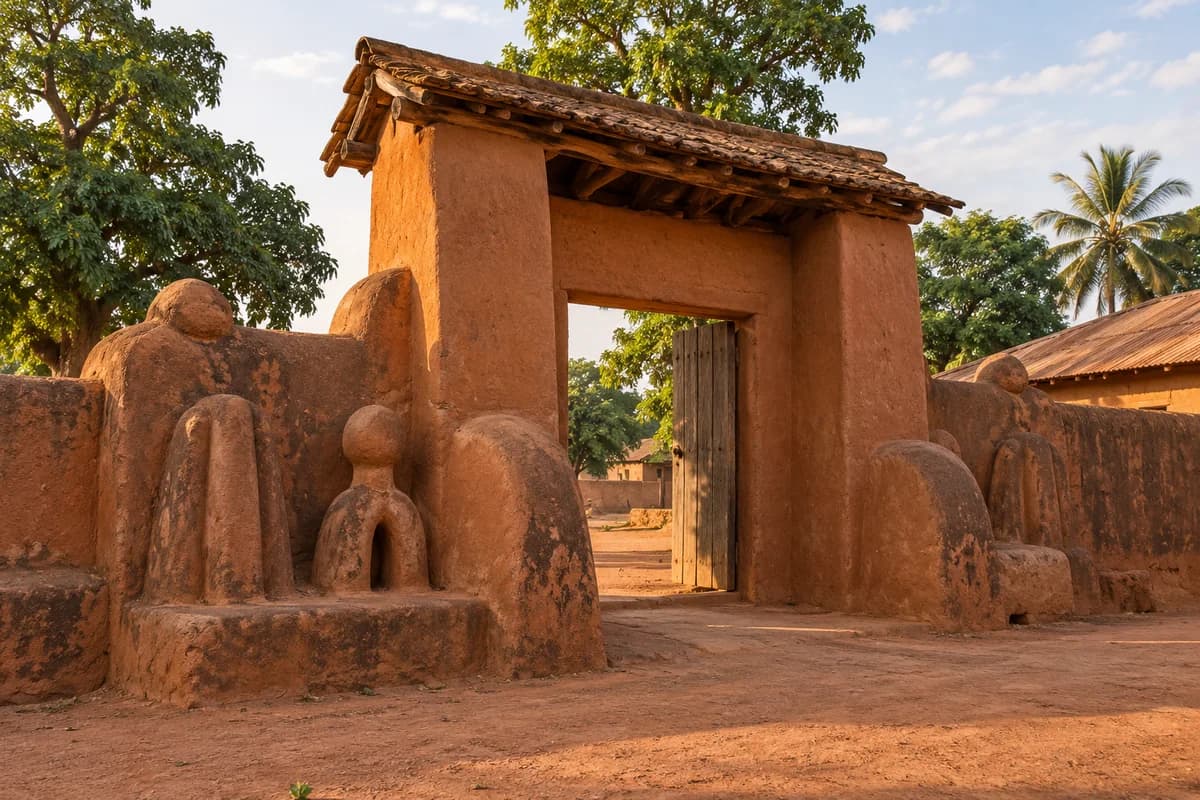
The Akaba Idéna gate is the old fortified entrance to Kétou, historic capital of a Yoruba kingdom in south-eastern Benin. Its two doors, one male and one female, are venerated as protective deities. The site is part of the "Landmark Sites of the Slave Route in Benin", placed on UNESCO's Tentative List in 2021.
History of the kingdom of Kétou
The kingdom of Kétou traces its origins to Ilé-Ifè, in present-day Nigeria, and to the mythical ancestor Oduduwa. According to tradition, King Edé left Aro with one hundred and twenty families and settled beneath the tree of the hunter Alalumon, around which the town grew. The founding date remains uncertain.
The sovereign bears the title Alaketu. The 51st Alaketu, Adedun Loyé, was crowned on 25 March 2018.
In the 19th century Kétou suffered the wars of neighbouring Danxomè. In 1886, under King Glèlè, the town was taken and many inhabitants were carried off into captivity. The kingdom was restored in 1893 under a French protectorate. Deported people from Kétou left their mark on Afro-Brazilian religions, where the name Ketu lives on.
The Akaba Idéna gate, entrance to the kingdom
According to the Beninese government, Akaba Idéna is a historic fortification of about 600 m², with a defensive wall 80 cm thick, an inner courtyard, terraces and alcoves. Its two doors formed the only entrance to the kingdom. The government describes it as the only and last gate built into a fortification in the Yoruba cultural area.
Oral tradition says these doors protected Kétou for centuries against invasions from Abomey. They are said to have warned the town when the enemy approached. Carried off to Abomey as war trophies, they are said to have returned to their place on their own, with no one knowing how.
Some traditions credit King Sa, the fourteenth Alaketu, with building the doors; this attribution is not confirmed by an official source.
Rituals and meaning of the Akaba Idéna gate
The two doors, one male and one female, are regarded as guardian deities. Their spirit watches over the town and warns the people and the kingdom's authorities of threats.
On 31 October 2024 the doors closed. According to the daily Matin Libre, the Fâ oracle was then consulted and gave the sign Irosun Aare, interpreted as an affirmation of divine protection over Kétou.
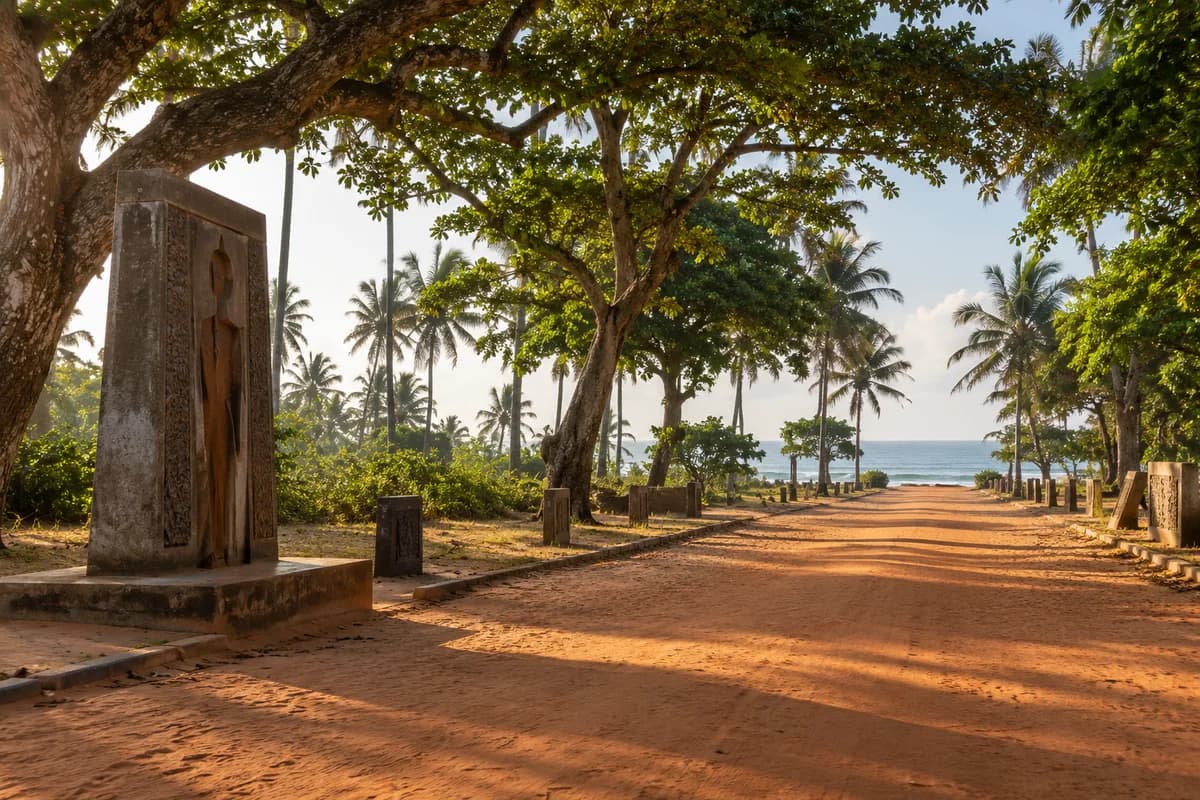
In the UNESCO Tentative List file, the Kétou site illustrates the Slave Route through the square where the king bought back captives, the entrance gate, "a true symbol of resistance", the ditches and Kouhoudou square.
What to see in Kétou
The gate now houses the Akaba Idéna museum, which presents the town's fortifications, the kingdom's former single entrance and many Yoruba altars and sculptures. The government launched rehabilitation works in July 2020: first the gate itself, then the access roads and courtyards. Their continuation was approved in September 2024.
The town also has the Alaketu's royal palace. Kétou is also regarded as a cradle of Gèlèdè, a Yoruba-Nago masked ceremony honouring the primordial mother and the role of women. Gèlèdè has been on UNESCO's Representative List of the Intangible Cultural Heritage since 2008, after its proclamation in 2001.
Planning your visit
Kétou is about 140 km north of Cotonou, close to the Nigerian border. The Akaba Idéna gate is a sacred place: follow the museum keepers' instructions, do not touch the altars and ask permission before taking photographs. As rehabilitation works have taken place in recent years, check opening times and prices with Kétou town hall or the tourist office; no up-to-date official hours are published.
Opening hours and prices can change: check locally or with the tourist office before you go.
Sources
- UNESCO, liste indicative : Sites marquants de la Route de l'Esclave au Bénin (2021)
- Gouvernement du Bénin : musée Akaba Idenan de Kétou, travaux de réhabilitation (2 juillet 2020)
- Matin Libre : fermeture des portes magiques Akaba Idénan de Kétou (5 novembre 2024)
- Bénin Révélé Mag : Kétou, berceau du Guèlèdè
- UNESCO, patrimoine culturel immatériel : le patrimoine oral Gèlèdé
- Wikipédia : Kétou
Checked in September 2026.