The Glo-Djigbé Industrial Zone, known as GDIZ, is the flagship of Benin's industrial drive. Launched in 2020, it aims to process cotton, cashew, soybeans and shea at home instead of exporting them raw. This guide explains how it works, which industries operate there, what incentives it offers and what it could mean for a Belgian company.
Where is GDIZ and who runs it?
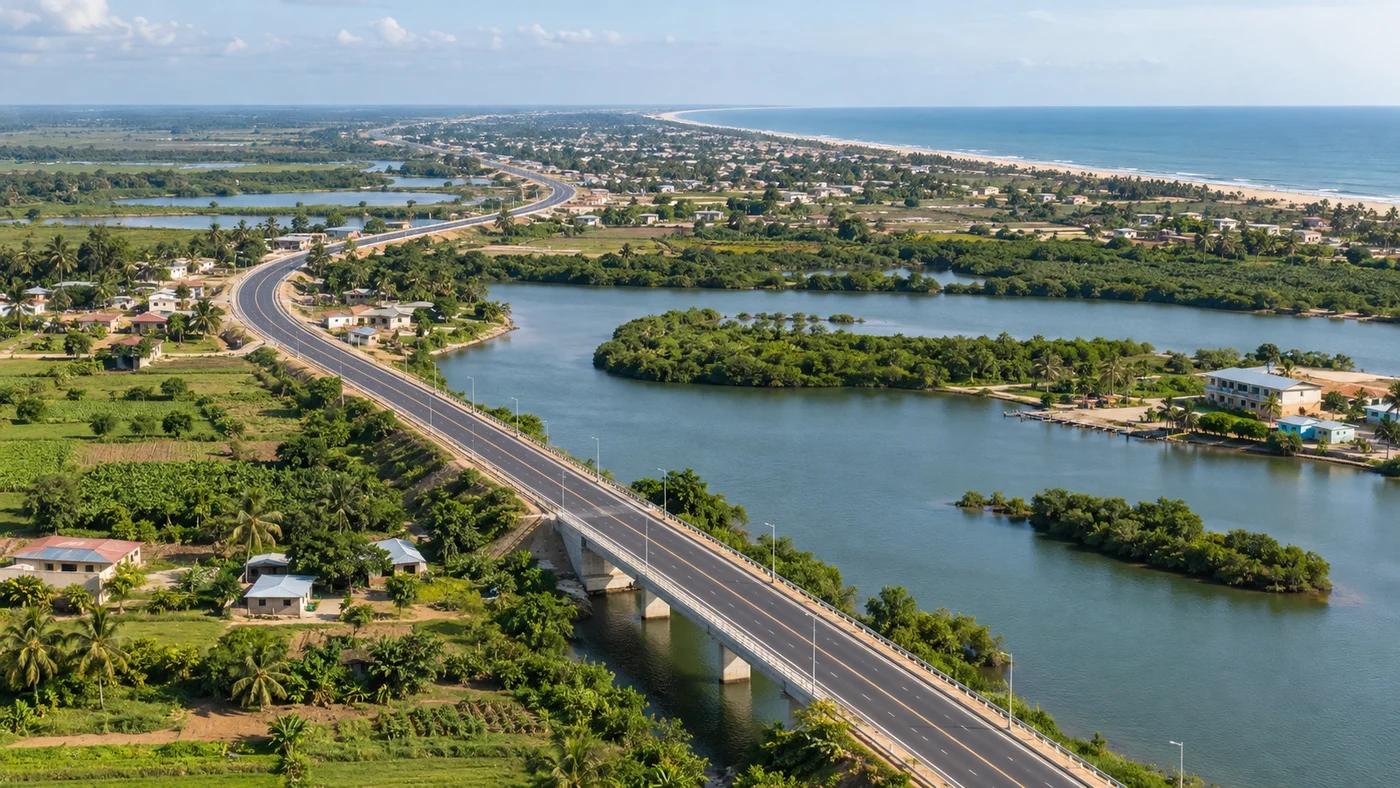
The zone covers 1,640 hectares in the municipality of Zè, north of Cotonou. It lies about 45 km from the port, while an expressway links it to both the port and the airport. Development follows three phases: first 400 hectares, then 600, then 640.
The Société d'investissement et de promotion de l'industrie (SIPI-Bénin) manages the whole site. It is a joint venture between the Beninese State and the Arise IIP group, which specialises in industrial zones in Africa. So this public-private partnership funds the roads, power, water and shared services.
Industries at the Glo-Djigbé Industrial Zone
Above all, the priority remains processing Benin's farm produce. At the Glo-Djigbé Industrial Zone you will find, in particular:
- textile plants, from spinning to garment making, using local cotton;
- cashew and soybean processing factories;
- activities linked to shea, pineapple and cosmetics;
- production of building materials, packaging and other manufactured goods.
This focus also rests on a bold decision. Since 1 April 2024, exports of raw cashew nuts and soybeans have indeed been banned, unless a waiver applies. As a result, factories get first access to raw materials. For more context, read our article on Benin cotton.
Key figures in 2026
The Glo-Djigbé Industrial Zone has passed several milestones. In September 2026, the Beninese press reports:
- 40 investors with signed land reservation contracts;
- some twenty industrial units in operation;
- more than 25,000 jobs, mostly in textiles.
The developers also target over 300,000 direct jobs by 2030. However, that goal remains a projection. Our article on Benin's economy in 2026 puts these figures in the context of the country's growth.
Benefits for investors
A special tax and customs regime
Law no. 2017-07 of 19 June 2017 governs special economic zones. In particular, it grants tax and customs benefits for up to fifteen years. Thus imports of raw materials and equipment enjoy exemptions, while exports outside the customs territory carry no tax. The export regime applies to companies that export at least 80% of their output. Other regimes cover trade within the region, depending on the amount invested.
On-site services
The zone has a single window that brings together thirteen administrations, including customs, tax, labour and immigration. It also offers a container yard linked to the IT system of the Port of Cotonou, a truck terminal, warehouses and an effluent treatment plant. Finally, security, fire and medical services complete the set-up.
Jobs, training and challenges
The zone employs many young people, sometimes in their first industrial job. So the factories train much of their own workforce, especially in garment making. In addition, technical profiles remain in demand: maintenance, electrical work, quality control and logistics. These needs also matter to members of the diaspora who are thinking about moving back.
Challenges remain, however. Power supply must keep pace with growth, which is why a dedicated thermal plant is planned on site. Moreover, according to the Beninese press, part of the cashew harvest still leaves the country through informal channels. Scaling up the zone is therefore a project that will take several years.
Getting involved at Glo-Djigbé from Belgium
A Belgian company can set up at the Glo-Djigbé Industrial Zone, but it can also find customers or suppliers there. For example, equipment makers, engineering firms, logistics and maintenance providers all have openings. In practice, the process has a few steps:
- contact SIPI-Bénin and APIEx to present your project;
- then start a business in Benin or open a subsidiary;
- finally, apply for approval under the special economic zone regime.
For scouting trips, apply for your online visa (e-Visa). Likewise, articles of association and powers of attorney for Benin require the legalisation of documents.
Frequently asked questions
What does GDIZ stand for?
GDIZ stands for « Glo-Djigbé Industrial Zone », the English name that the zone also uses in French.
Is the zone only for large companies?
No. Large manufacturers work alongside SMEs, because the zone also offers warehouses and ready-built premises. Still, each project needs the operator's approval.
Can I visit GDIZ?
Visits mostly take place in a business setting, by appointment with the operator. If you are planning a mission, make that contact well before you leave.
In short, the Glo-Djigbé Industrial Zone embodies Benin's choice to process its resources at home. To prepare a project or a mission, read our guide to the growth sectors in Benin and contact Honorary Consulate of Benin in Liège.
Sources
- GDIZ: official presentation of the zone
- APIEx: special economic zones in Benin
- General Secretariat of the Government: Law no. 2017-07 of 19 June 2017
- La Nouvelle Tribune: 40 investors and 20 operating units in 2026
Article tags