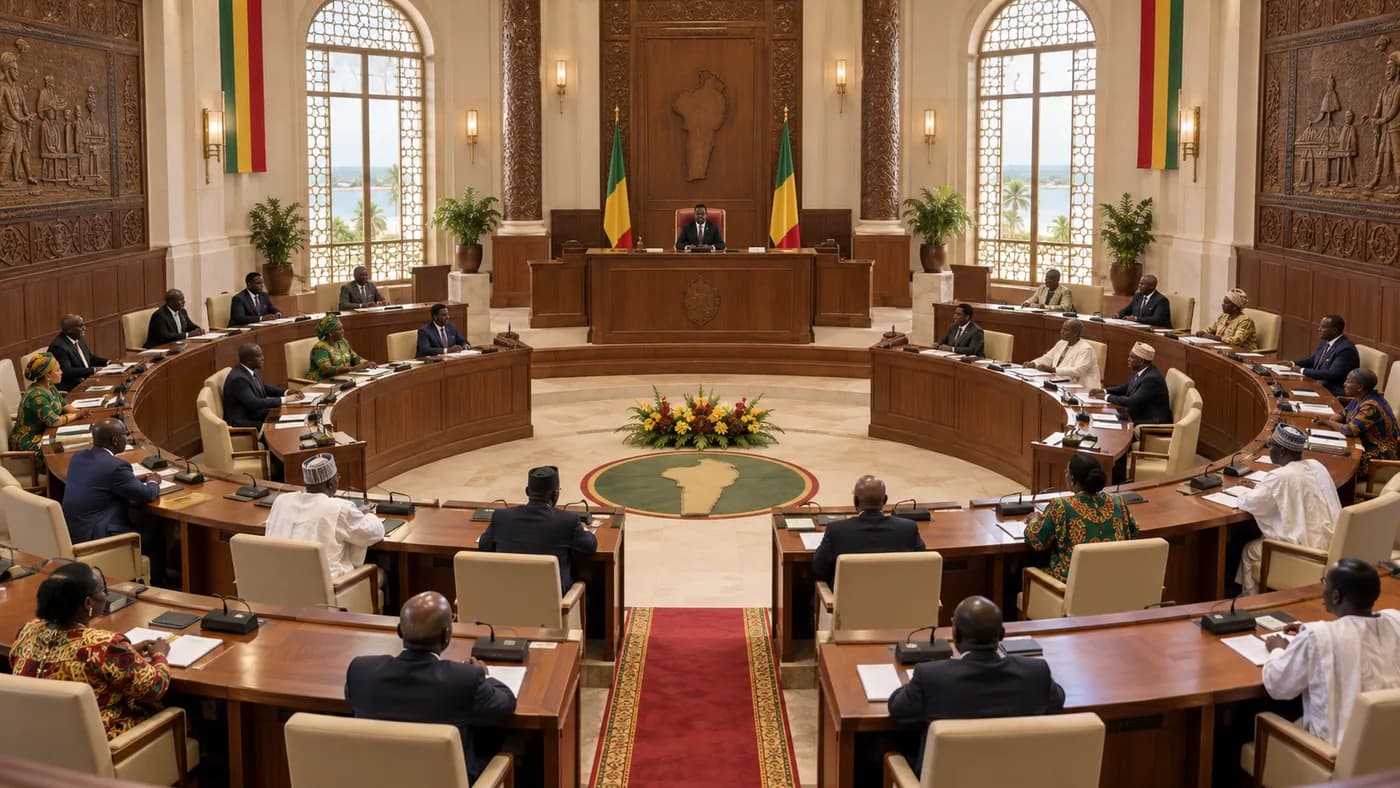
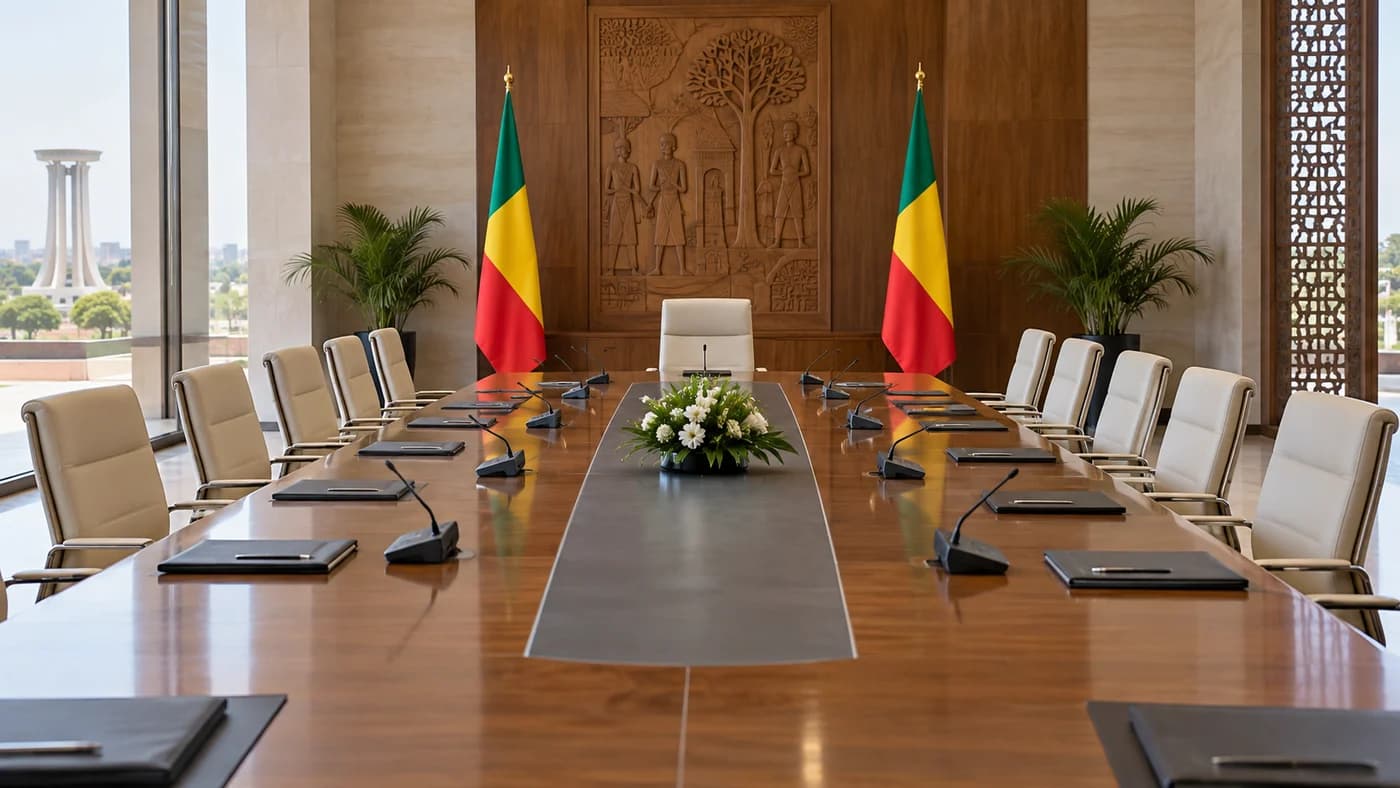
The roadmap for Benin municipalities 2026-2033 is now known. On Friday 2 October 2026, in Cotonou, the National Association of Benin Municipalities (ANCB) installed its new national board. Its chair, Luc Gnacadja, Mayor of Cotonou, presented the main priorities of his term.
The ANCB represents the country's 77 municipalities before the State and partners. The event came a few days after the launch of the territorial poles reform. It therefore marks the real start for a new generation of local leaders.
A new municipal term after the January 2026 vote
The councillors of the fifth municipal term were elected on 11 January 2026, in a vote held alongside the legislative election. According to the results announced by the electoral commission (CENA) on 27 January, turnout was 36.67%. The 1,815 council seats went to two parties: the Union progressiste le Renouveau (963 seats) and the Bloc républicain (852 seats). The Supreme Court later made partial corrections to these results.
The councils then elected their mayors. In Cotonou, Luc Gnacadja took office in February 2026. He succeeded Luc Atrokpo, who had been elected to parliament in January.
Luc Gnacadja at the head of the ANCB
On 18 August 2026, the ANCB held its 5th ordinary congress. Members reviewed the 2020-2026 term and then renewed the association's bodies. Luc Gnacadja was elected chair. He succeeds Luc Sètondji Atrokpo, who led the association for two terms, from 2016.
An architect by training, the new chair served as Minister of the Environment, Housing and Urban Planning from 1999 to 2005. From 2007 to 2013 he then headed the secretariat of the UN Convention to Combat Desertification.
| Position | Name | Municipality |
|---|---|---|
| Chair | Luc Gnacadja | Cotonou |
| 1st Vice-Chair | Idrissou Yaya | Djougou |
| 2nd Vice-Chair | Christian Houétchénou | Ouidah |
| Secretary-General | Zul Kifly Zakarié | Parakou |
| Treasurer-General | Auguste Ayihounhin | Covè |
Three priorities for Benin municipalities 2026-2033
The programme for Benin municipalities 2026-2033 rests on three priorities. Its aim is simple: to turn local areas into genuine economic engines, building on the territorial development poles.
1. Defending municipal interests
The first priority is to stand up for local authorities before the State, through demanding dialogue. Luc Gnacadja pointed to slow public procurement procedures. In his view, they often hold the execution of municipal budgets to around 30%.
2. Making the ANCB a practical support tool
The second priority is to turn the association into a hands-on instrument. It covers staff training, the preparation of sound projects and the sharing of proven solutions. The chair cited the Mèdédjro public primary school in Cotonou. A simple anti-flooding method devised by a teacher there was successfully extended to other schools.
3. Raising resources
The third priority concerns local finances. Municipalities are to increase their own revenue, find new funding and develop decentralised cooperation.
What the government expects
The Minister of Decentralisation and Local Governance, Janvier Yahouédéou, attended the ceremony. He set the new board three challenges: take decentralisation a step further, make the 77 municipalities more effective and accountable, and bring tangible improvements to people's daily lives.
« Nous avons une même population à servir. C'est cela qui doit nous rassembler. » (“We serve one and the same population. That is what must bring us together.”) Janvier Yahouédéou, Minister of Decentralisation and Local Governance.
The minister wants an association able to “unite, propose, support and help our municipalities progress”. He concluded: “that, in the end, is what we will be judged on”.
The link with the territorial poles reform
This roadmap is part of the six territorial development poles reform, which President Romuald Wadagni presented to prefects and mayors on 23 September. These poles are the first pillar of the Wadagni government's programme. For Benin municipalities, 2026-2033 will therefore be the period when these poles take shape on the ground.
Next steps for the ANCB: adopting its budget, setting up working committees and drafting a new strategic plan, after consulting the municipalities.
What changes for Beninese nationals in Belgium
The choices of Benin municipalities for 2026-2033 also matter to the diaspora. The municipality remains the level of government closest to families: civil status, land, markets, roads. Diaspora projects therefore often go through the town hall of one's home municipality. In addition, the priority on decentralised cooperation directly concerns Belgium. According to the Belgian Embassy in Benin, 25 Beninese municipalities already have partnerships with Belgian municipalities, such as the twinning between Natitingou and Huy.
To locate each municipality, read our article on the 12 departments of Benin and our Institutions and authorities page, which lists the municipalities and their mayors. The overall system is explained on our Politics of Benin page.
Sources
- Bénin Web TV: Luc Gnacadja unveils his 2026-2033 roadmap at the head of the ANCB (2 October 2026)
- La Nouvelle Tribune: Yahouédéou sets three challenges for the new ANCB board; Luc Gnacadja replaces Atrokpo at the ANCB
- Triomphe Mag: Members of the ANCB board
- Bénin Intelligent: Final results of the 2026 municipal elections
- Belgian Embassy in Benin: Development cooperation
Article tags