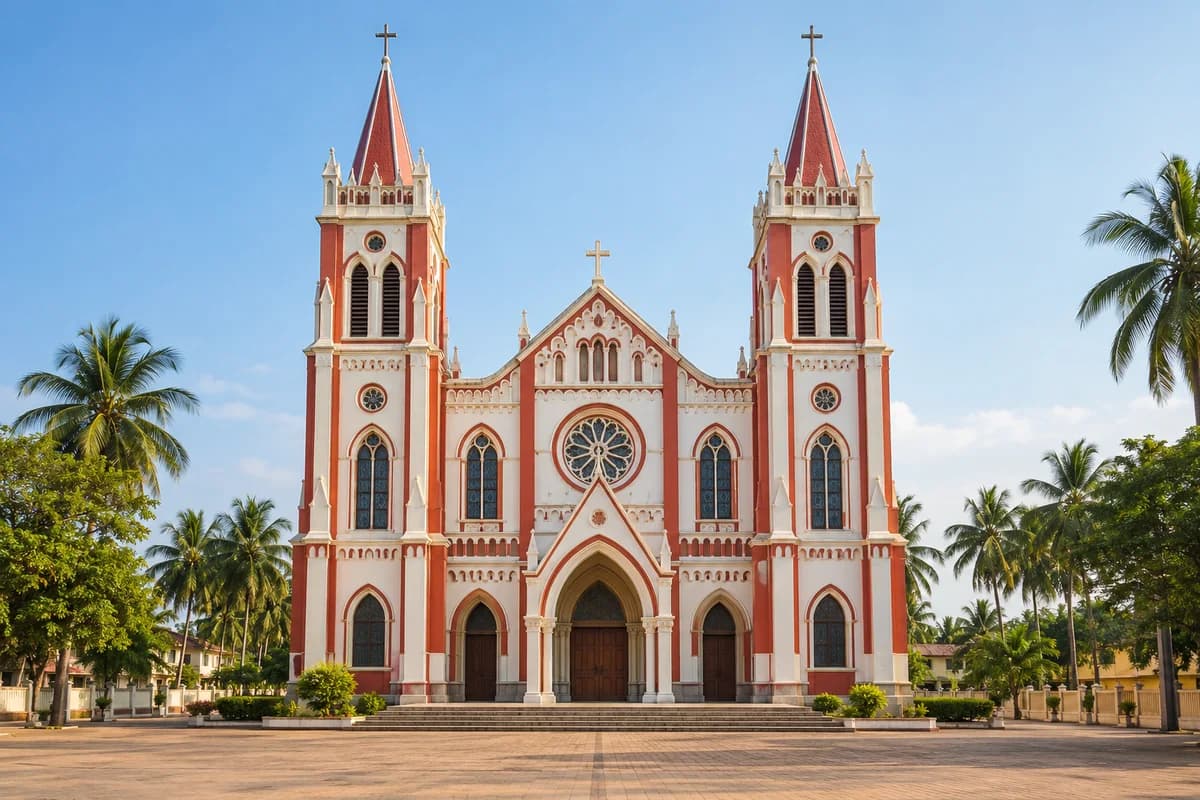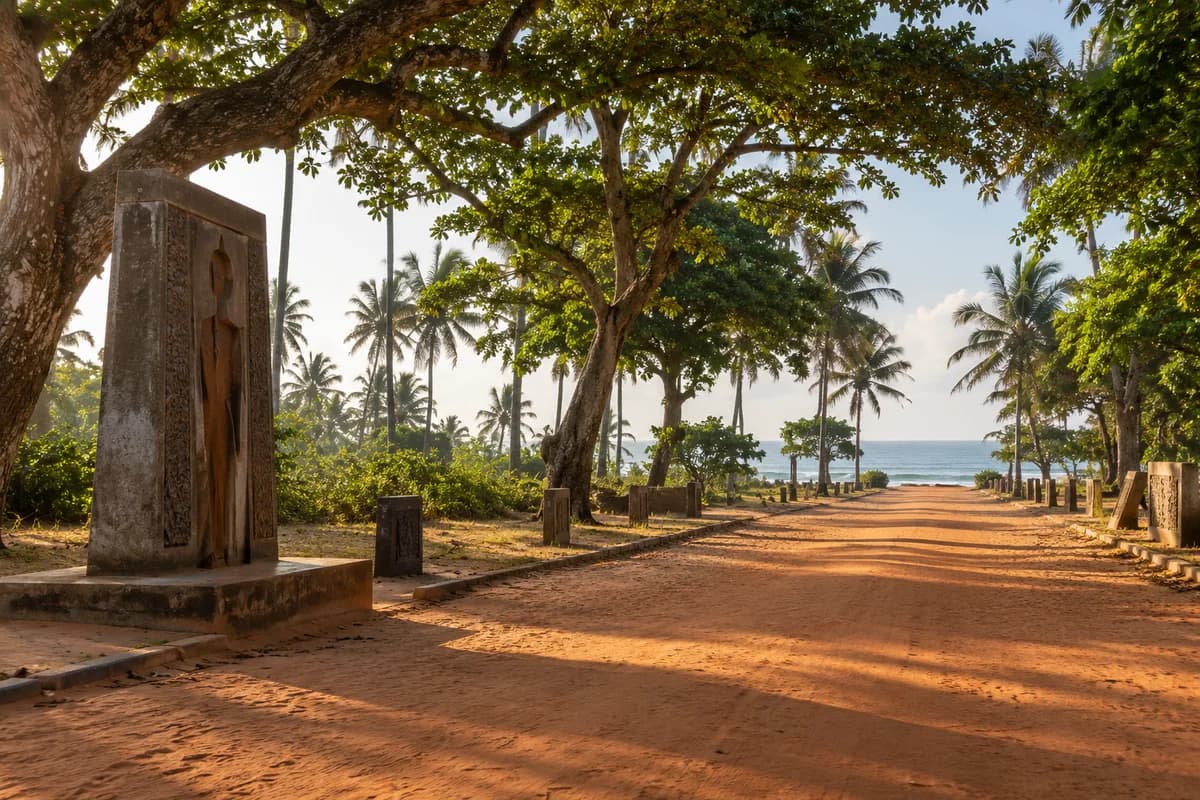
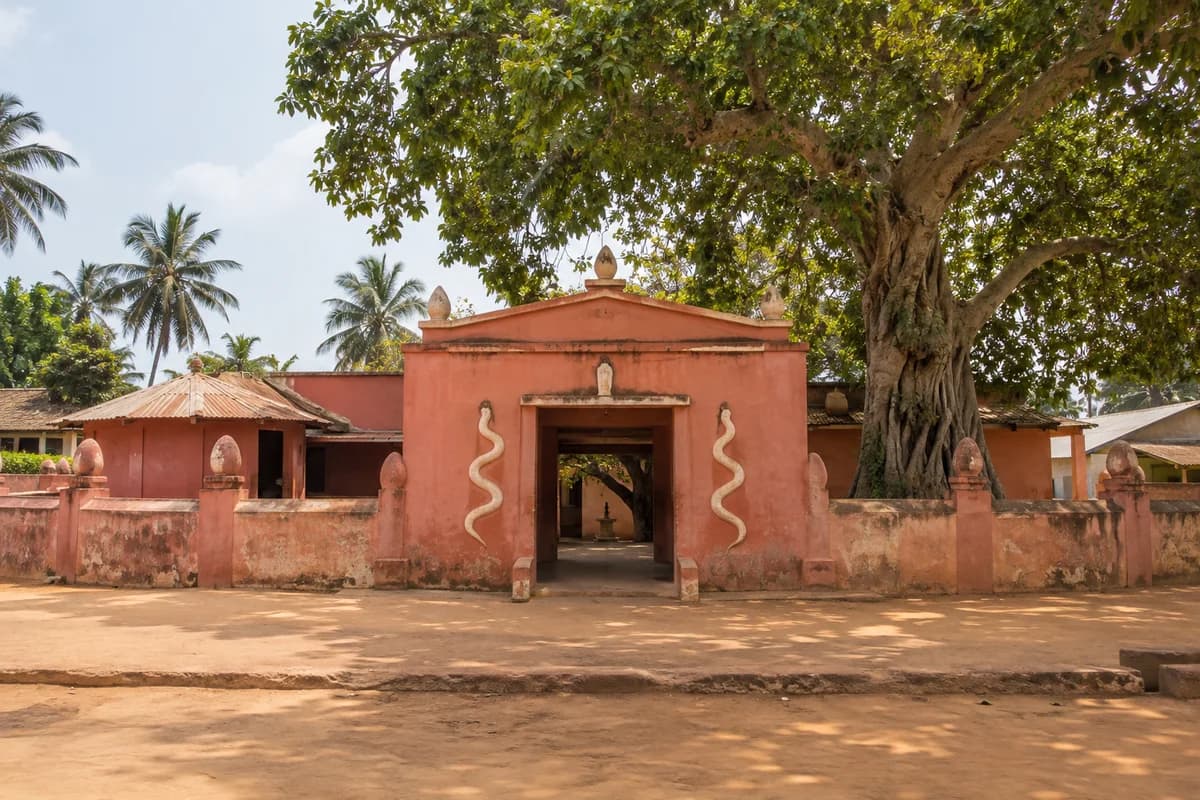
The Temple of Pythons in Ouidah is a vodun shrine dedicated to Dangbé, the serpent deity. It stands in the heart of the town, on Place Agoli, opposite the Basilica of the Immaculate Conception. Accounts by European travellers record a serpent cult here as early as the late 17th century.
History of the Temple of Pythons in Ouidah
The serpent cult is among the oldest recorded in Ouidah. Father Labat relays the account of a missionary, Father Braguez, who saw the king himself consult the serpent in the late 17th century. In his Description of the Coast of Guinea, the Dutch merchant Willem Bosman notes that serpents were the most important deities of Fida, one of the European names for Ouidah.
The shrine has probably moved over time. In 1873, Abbé Laffitte described a round earthen building, thatched with dry grass, where some twenty snakes were worshipped.
The temple grounds once covered several hectares; urban growth has greatly reduced them. The buildings were restored for the 'Ouidah 92' festival, with the help of the families who look after the site. According to the temple's keeper, quoted by the daily La Nation in 2025, the pythons once protected the Xwéda kingdom and its crops.
Dangbé, the sacred python
Dangbé is a particular form of vodun. The temple is home to several dozen royal pythons (Python regius), a species harmless to people that rarely exceeds 1.5 metres. The female, dangbé drè, is larger than the male, dangbé kpohoun.
The snakes are not fed. They are let out once a week: they hunt insects and rodents and sometimes wander into nearby houses. If a python has not come back after 72 hours, residents bring it back to the temple, since it is held to be sacred.
Followers of the cult traditionally bear scarifications known as '2 x 5': two parallel marks at five places on the face. Every 10 January, priests, followers, residents and visitors gather at the temple for major ceremonies.
What to see
The present site has two courtyards. The first contains:
- a building shaped like a truncated cone, of about 12 m², which houses the pythons;
- a round thatched hut at the entrance, presented as the original feature;
- the zingbin, a large white sacred jar more than two hundred years old, at the centre of a ceremony held every seven years.
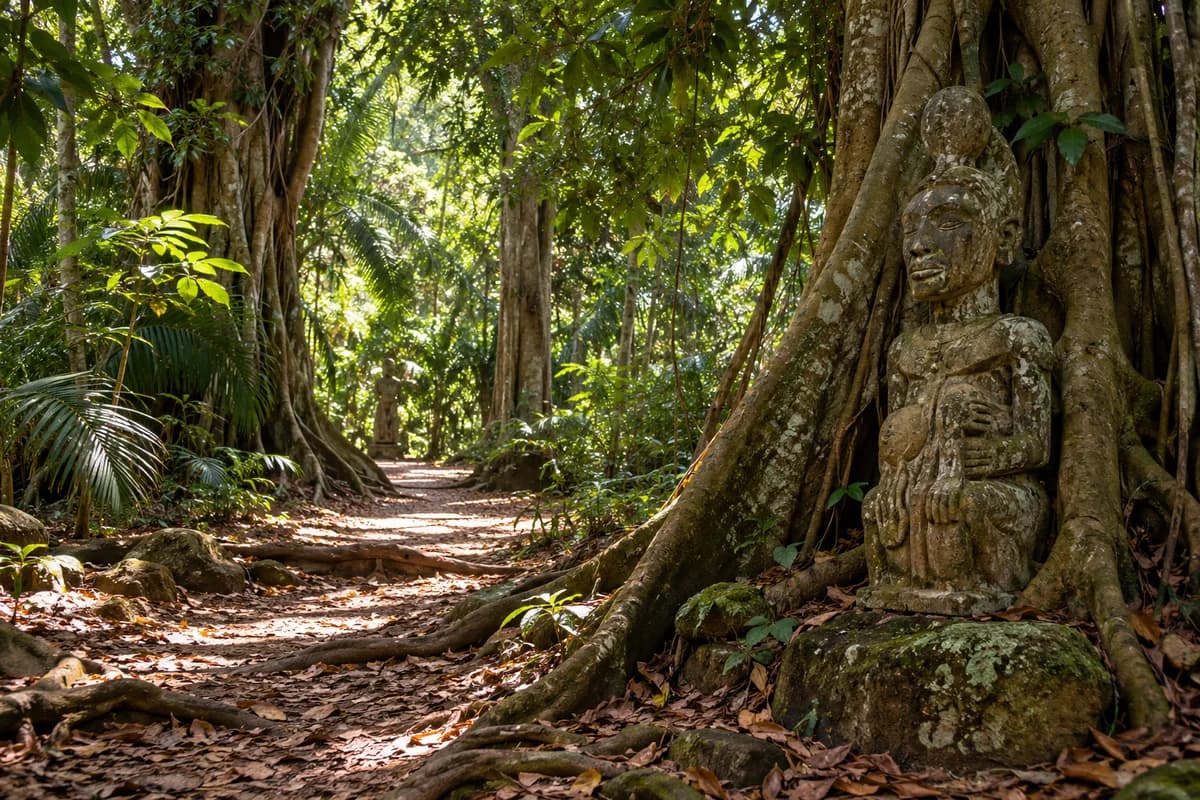
The second courtyard, enclosed by a pink fence, shelters a sacred iroko tree wrapped in white cloth. Tradition says it is six hundred years old and home to the spirits of the ancestors. On Place Agoli, in front of the temple, stands a century-old baobab.
Vodun and Christianity, face to face
The temple faces the Basilica of the Immaculate Conception, built in 1909. Only about ten metres separate the two buildings. According to La Nation, vodun followers gave land to the Catholic missionaries and helped to build the church.
This coexistence, more than a century old, makes Place Agoli a place where two religious traditions meet every day. During the Vodun Days, the temple and the basilica welcome many visitors from around the world.
Did you know?
- The python is the emblem of the town: the awards of the Ouidah International Film Festival are called 'Python', and the highest honour is the 'Python royal'.
- A Dahomey stamp issued in 1963 shows a man carrying a python. It was put back into circulation in 2009 with the overprint 'République du Bénin'.
- The temple is run by the families who hold the cult. In 2014, disputes between these families led the mayor to close the site temporarily.
Planning your visit
The temple is in the centre of Ouidah, some forty kilometres west of Cotonou, opposite the basilica. There is an admission charge; ask on site. For a donation, visitors can be photographed with a python around their neck: this is never compulsory, and the keeper's instructions must be followed. The temple is still an active place of worship, so dress and behave respectfully. According to its keeper, the only rule of the place is not to wish harm on others.
Opening hours and prices can change: check locally or with the tourist office before you go.
Sources
- Wikipédia, Temple des Pythons (sources anciennes : Labat, Bosman, Laffitte)
- Agence Anadolu, « Bénin : Ouidah, une ville historique sous la protection des pythons » (janvier 2015)
- La Nation, « Basilique et Temple des pythons à Ouidah : un symbole de cohabitation interreligieuse » (janvier 2025)
Checked in September 2026.