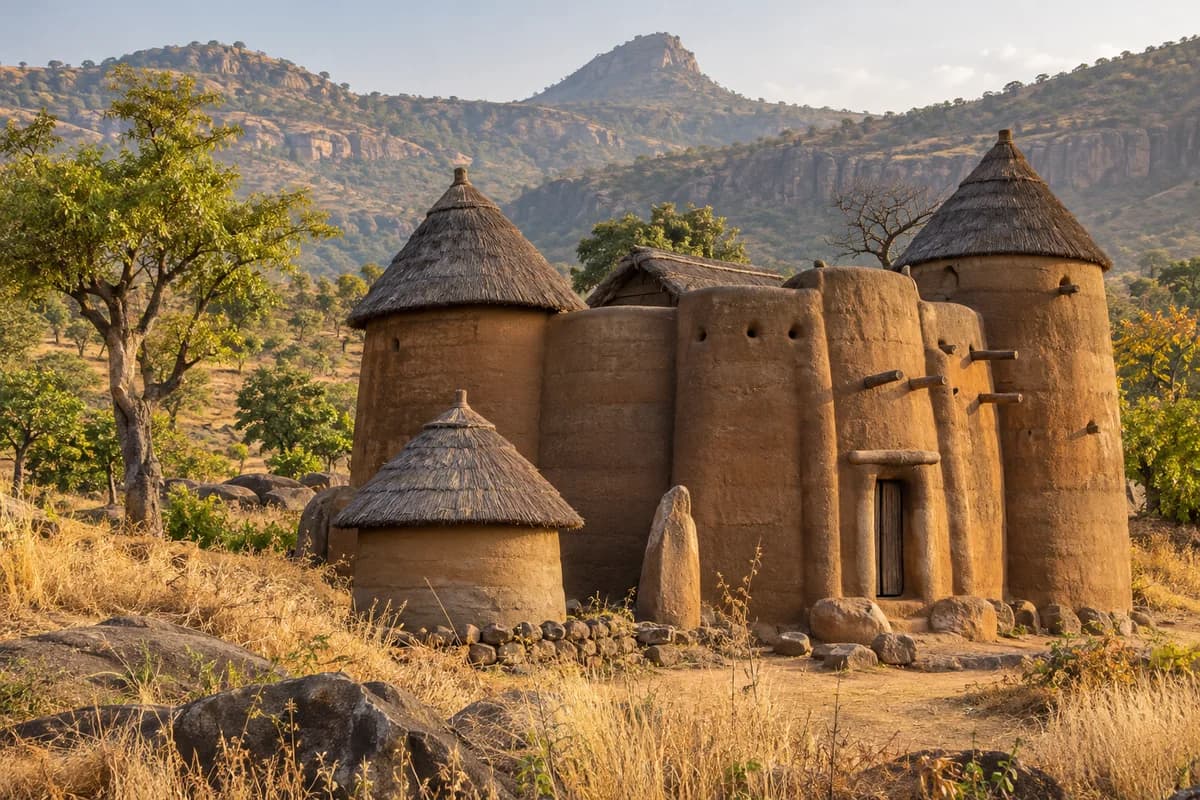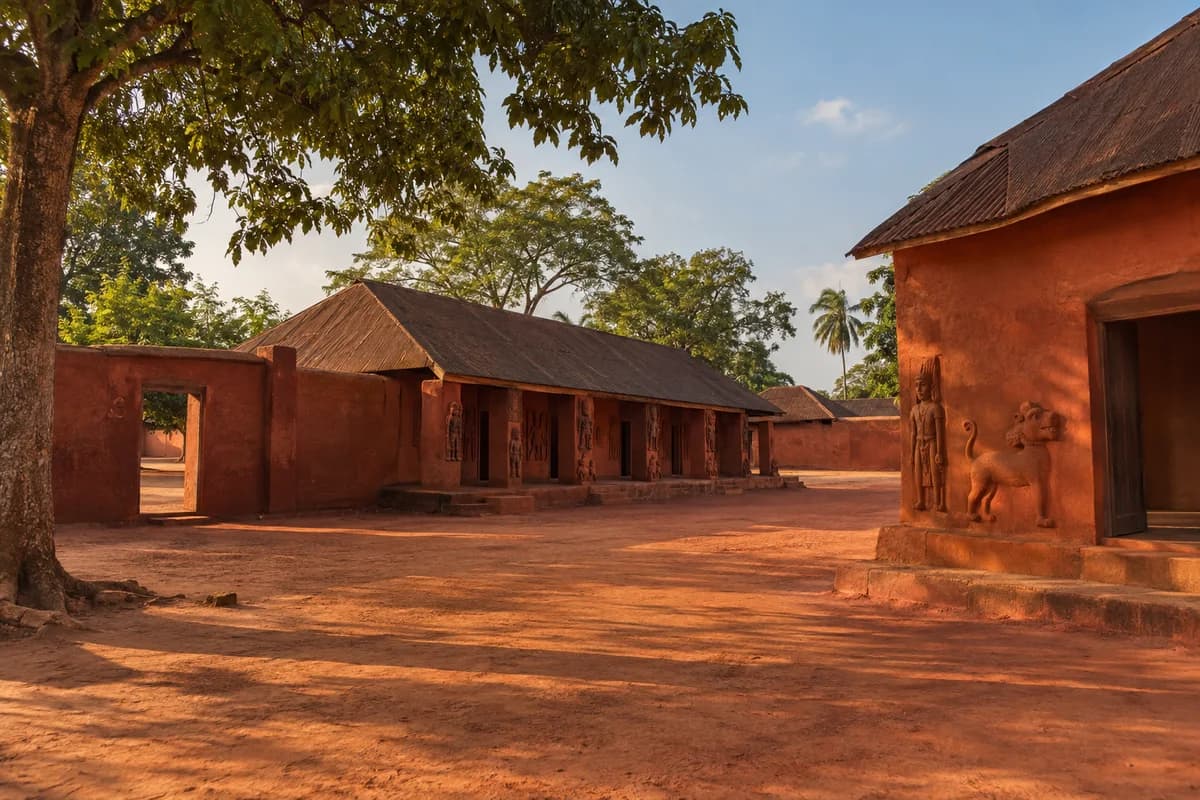
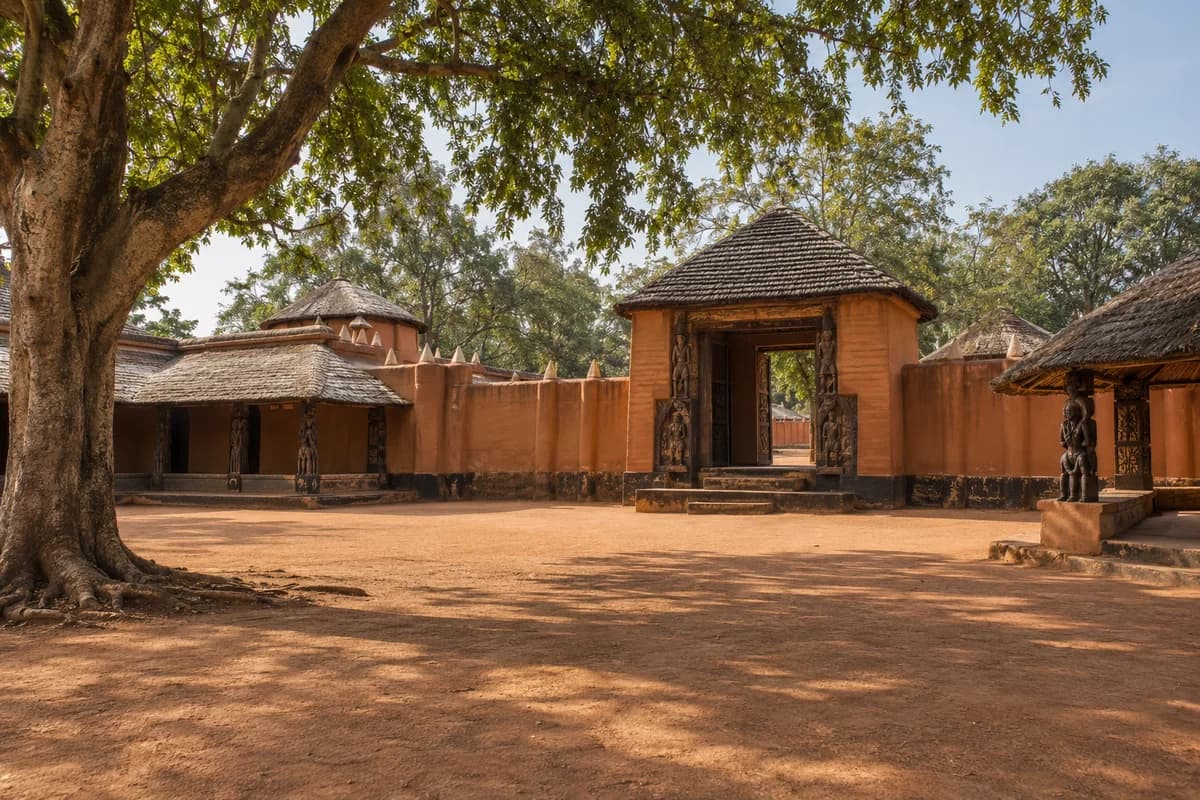
The royal palace of Nikki is the seat of the Sinaboko, traditional sovereign of the Baatonu, also called Bariba, in north-eastern Benin. Nikki is the historic capital of their kingdom. Every year the palace becomes the heart of the Gaani, the great identity festival of the Baatonu and Boo peoples.
History of the kingdom of Nikki
According to tradition, the Wassangari arrived in the region around 1480, led by Mansa Doro. A leader named Séro was then chosen to govern the community. His youngest son, Simé, founded a new residence that would become Nikki. Local tradition derives the name from a remark by Simé about how damp the place was.
Nikki became the capital of a Baatonu kingdom whose sovereign bears the title Sinaboko. The Beninese press also calls him emperor of the Baru Tem, the Baatonu country. Several dynasties have held the throne, including the Lafiarou and the Bassi.
The kingdom's history is not only one of victories. The ritual stations of the Gaani also recall military defeats, disappearances and succession crises that collective memory does not erase.
From the historic palace to the new royal palace of Nikki
The Beninese State built a new royal complex on a 20-hectare estate, 5 hectares of which for the first phase. It includes the king's residence, the queen mother's residence, a mosque, a hall for the sacred drums and trumpets, a parade ground for horsemen and a 3,500-seat arena with covered stands.
The Sinaboko moved into the new palace at the end of August 2025, without an official inauguration ceremony. Media reports give 27 or 28 August depending on the source. President Patrice Talon had visited the site on 29 July 2025.
The old palace at Gounou has not disappeared: it remains one of the stations on the Gaani ritual route, linking the kingdom's present to its past. The Danri site also houses a palace museum dedicated to the first sovereign of the Lafiarou dynasty.
The Gaani, festival of the royal palace of Nikki
The Gaani takes place on the twelfth day of the third lunar month of the Baatonu calendar, so its date changes every year. In 2025 it was held from 5 to 7 September, for the first time in the new arena; in 2026, from 25 to 27 August.
It originates in an adaptation of the Mawlid, the Muslim celebration of the Prophet's birth, introduced to Nikki by Dendi merchants with the agreement of the king at the time. Today it symbolises the victory of the Baatonu over their enemies and the start of a new lunar year.
- First day: the Sinaboko rides on horseback to ritual stations honouring past sovereigns, accompanied by drums and royal trumpets. The first station, at Demandou, opens with the imam's prayers.
- Second day: at the Kayessi, princes and notables renew their allegiance to the sovereign.
Did you know?
- According to Le Potentiel, the Sinaboko's ritual route covers about fifteen kilometres; the number of stations varies between reports (eight or nine).
- In 2026 the government took charge of organising the Gaani, through the agency that runs the Vodun Days. The imperial court keeps control of the religious rites.
- The Gaani is also celebrated by communities in Nigeria and Togo.
Planning your visit
Nikki is about 115 km from Parakou and 529 km from Cotonou: plan for a long drive with a stop in Parakou. The palace is the residence of a reigning sovereign; ask the court for a visit, ideally through a local guide. During the Gaani the town welcomes thousands of visitors: book accommodation early and respect the ritual moments. No visiting hours or prices are published; ask at the tourist office, and ask permission before photographing the sovereign or the rites.
Opening hours and prices can change: check locally or with the tourist office before you go.
Sources
- Wikipédia : Nikki (commune)
- Wikipédia : Fête de la Gaani
- Le Matinal : construction du palais royal et de l'arène de la Gaani (13 août 2024)
- SRTB : à quelques jours de la Gaani, le roi s'installe dans son nouveau palais (2025)
- Le Potentiel : Gaani à Nikki, le parcours rituel du Sinaboko (26 août 2026)
- Afrik.com : la Gaani, fête identitaire des Baatombus au Bénin (12 décembre 2024)
Checked in September 2026.