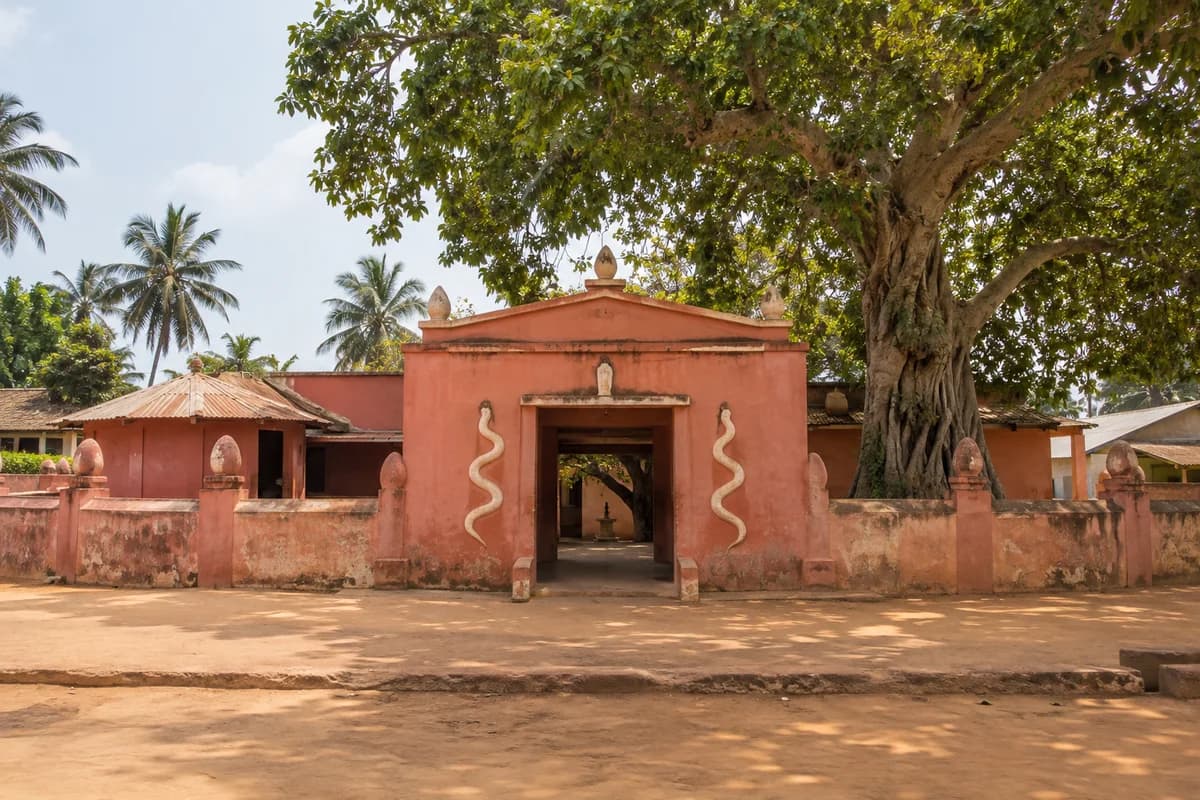
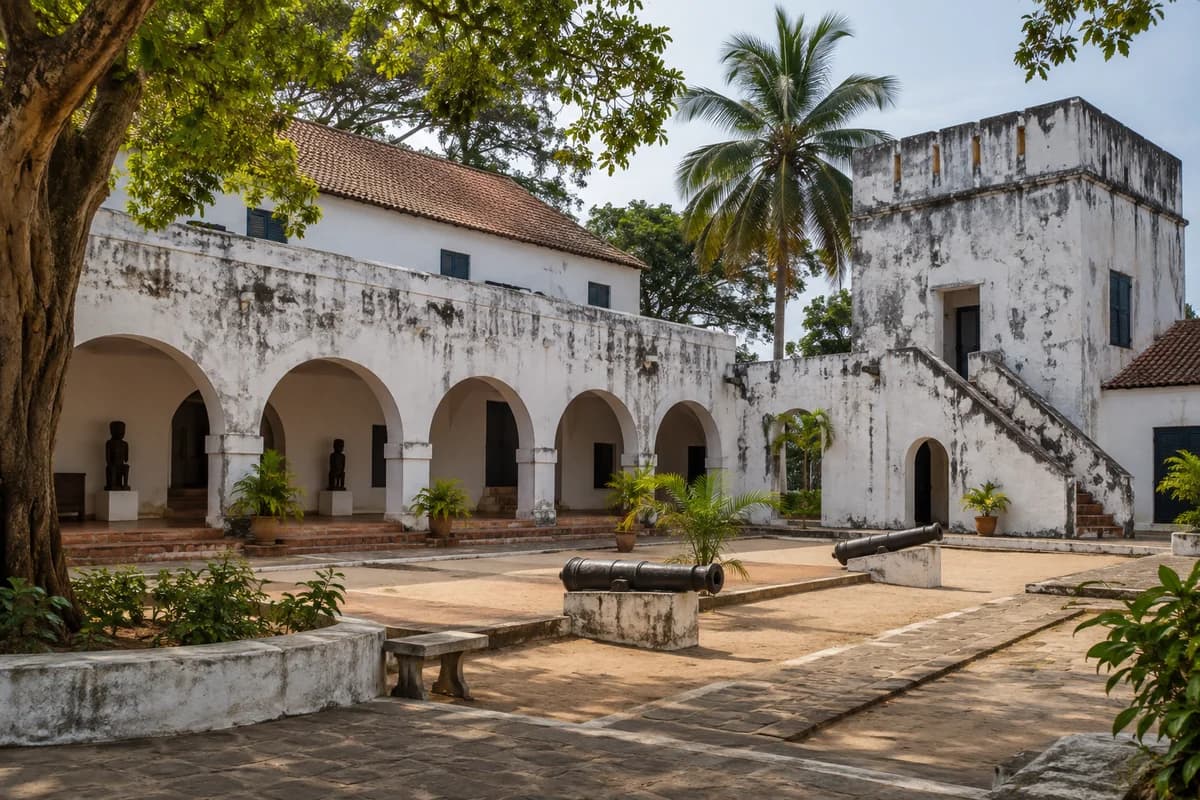
The Portuguese Fort of Ouidah, or fort of São João Baptista de Ajudá, was built in 1721. It remained Portuguese until 1961 and has housed the Ouidah Museum of History since 1967. It is now the subject of a major restoration project.
History of the Portuguese Fort of Ouidah
From the late 17th century, Portugal sought a foothold on the Slave Coast. In 1721, Captain José Torres, a merchant and shipowner, offered to build a fort at Ouidah at his own expense. He arrived in July 1721 and chose the site; the fort was built by captives of the Xwéda king.
The fort was named São João Baptista de Ajudá, Ajudá being the Portuguese name for Ouidah. It served as a slave-trading post. The file submitted by Benin to UNESCO states that it held storehouses for captives.
The fort remained a small Portuguese enclave, of about 4.5 hectares according to the Portuguese broadcaster RTP, long after the end of the slave trade. On 1 August 1961, a year after Dahomey's independence, Dahomeyan troops took control. The last two Portuguese officials set fire to the buildings before leaving. Portugal only formally recognised the annexation in 1985.
The Ouidah Museum of History
The fort was listed as a historic monument in 1964. Restored with help from France and the United States, it became the home of the Ouidah Museum of History, opened on 6 September 1967. It was one of the first slave-trade sites in West Africa to become a museum, after the House of Slaves on Gorée.
A further restoration began in the late 1980s with the Portuguese Calouste Gulbenkian Foundation. It was inaugurated on 10 August 1990.
The museum occupies the former residence of the Portuguese governor. Its collections, about 700 objects, are arranged around several themes:
- the former Portuguese fort;
- the Xwéda kingdom;
- the kingdom of Danxomè;
- the slave trade;
- vodun;
- the cultural links between Benin and the Americas.
What to see inside the walls
The current works aim at a faithful restoration. According to the Beninese daily La Nation (November 2021), they cover:
- the governor's house, in Afro-Brazilian style, of about 280 m²;
- the officers' barracks, of about 300 m², with armoury and mess;
- the chapel, which is preserved;
- a small building recalling the captivity of slaves before boarding;
- the ramparts, 4.5 metres high on average, and part of the moat, left dry.
Three entrances with ramps for people with reduced mobility are planned, along with a craft area and a snack bar.
Towards the International Museum of Memory and Slavery
The fort is at the heart of the project to rebuild the historic town of Ouidah, led by ANPT and funded by the World Bank. The project includes building the International Museum of Memory and Slavery (MIME, Musée international de la mémoire et de l'esclavage). The first restoration phase of the fort has been provisionally handed over.
In January 2022, the Beninese government reported the restoration of the governor's house and the chapel, and the building of a slave quarters and a reception area for visitors and school groups. At the time of checking, no official source confirms an opening date for the MIME.
Did you know?
- The Portuguese fort was not alone: in Ouidah, the Fon also traded with French, English and Dutch forts. ANPT's project includes the restoration of the French fort.
- A 1921 census counted only five inhabitants in the enclave. By 1961, just two people still represented Portuguese sovereignty.
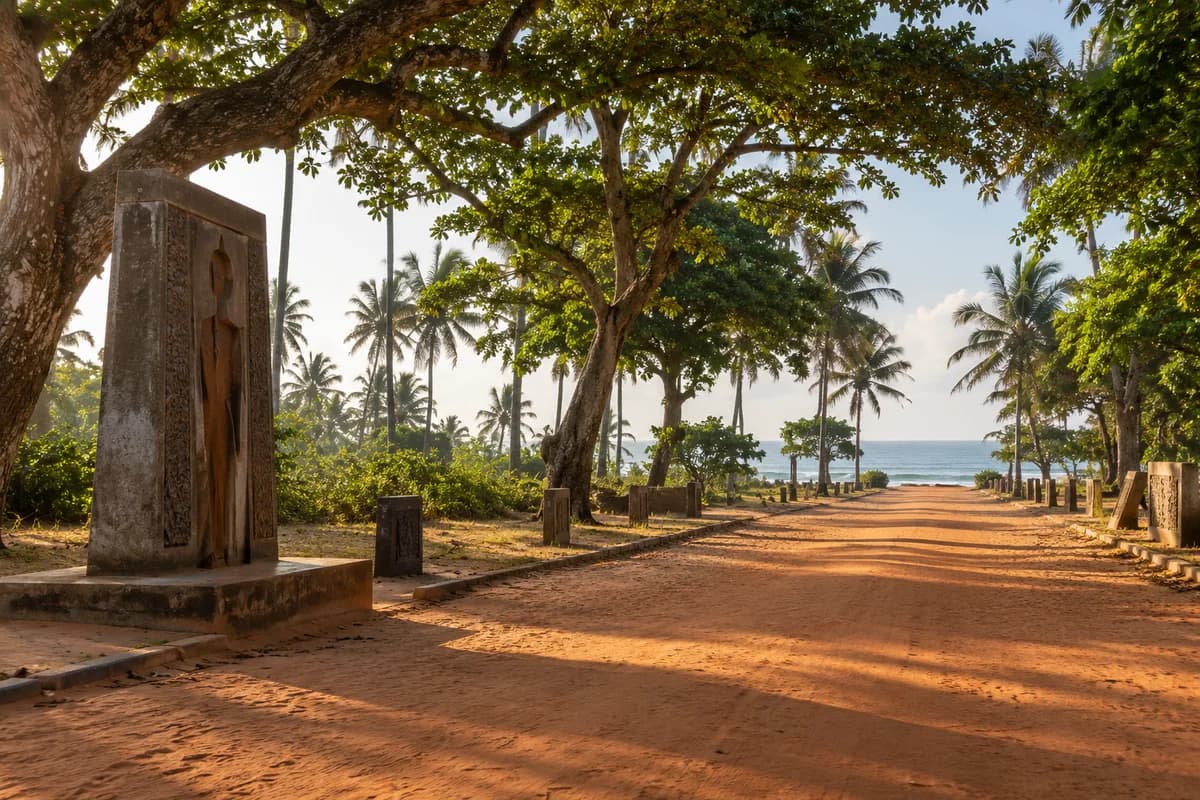
- In 2012, the municipality of Ouidah opened a memorial near the museum to the millions of deported Africans. The plaque stands beside an assin, a Fon funerary altar made of an iron rod topped by a metal disc.
Planning your visit
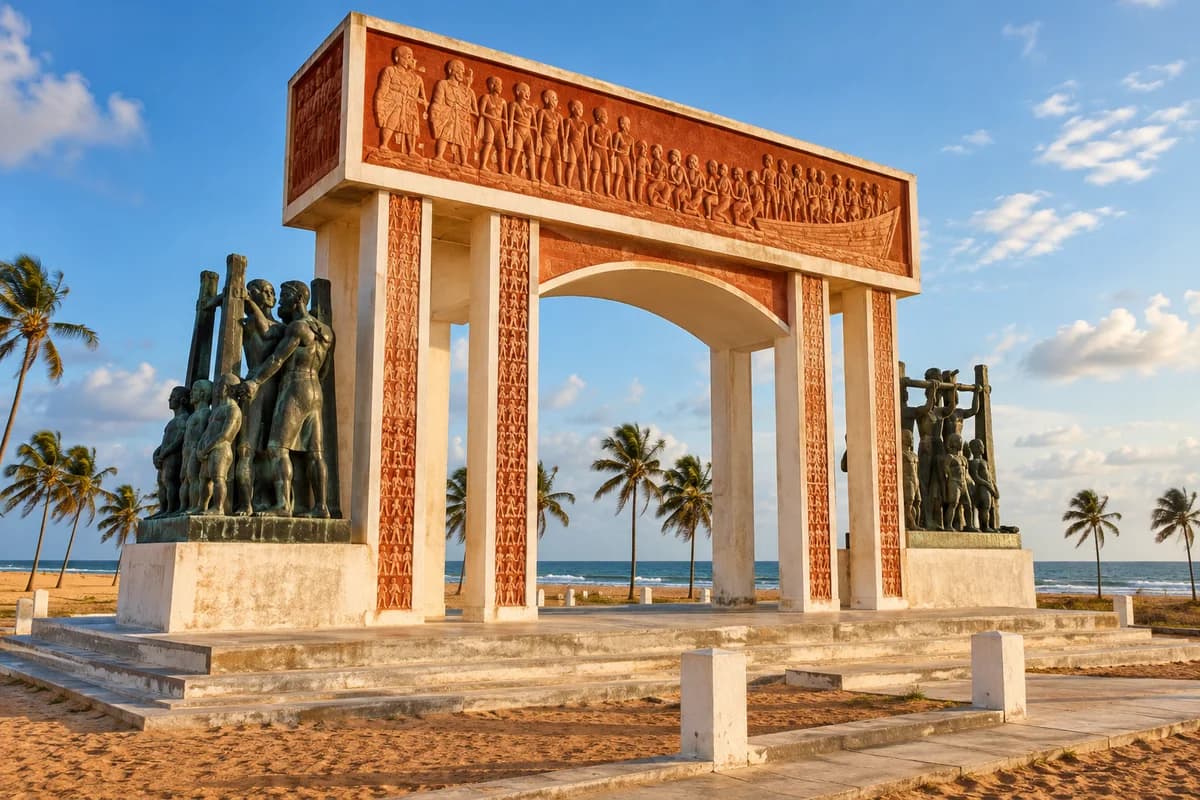
The fort is in the centre of Ouidah, a town some forty kilometres west of Cotonou, close to the auction square where the Slave Route begins. The restoration works and the fitting-out of the MIME affect visitor access: check that the site is open before you travel. A guided visit links the fort with the town's other places of remembrance.
Opening hours and prices can change: check locally or with the tourist office before you go.
Sources
- UNESCO, liste indicative : Sites marquants de la Route de l'Esclave au Bénin (2021)
- ANPT, Projet Ouidah
- La Nation, « Fort portugais de Ouidah : vestiges réhabilités à l'identique » (novembre 2021)
- Gouvernement du Bénin, chantiers de la cité historique de Ouidah (janvier 2022)
- RTP, « O fim de São João de Ajudá »
- Wikipédia, Musée d'histoire de Ouidah
Checked in September 2026.