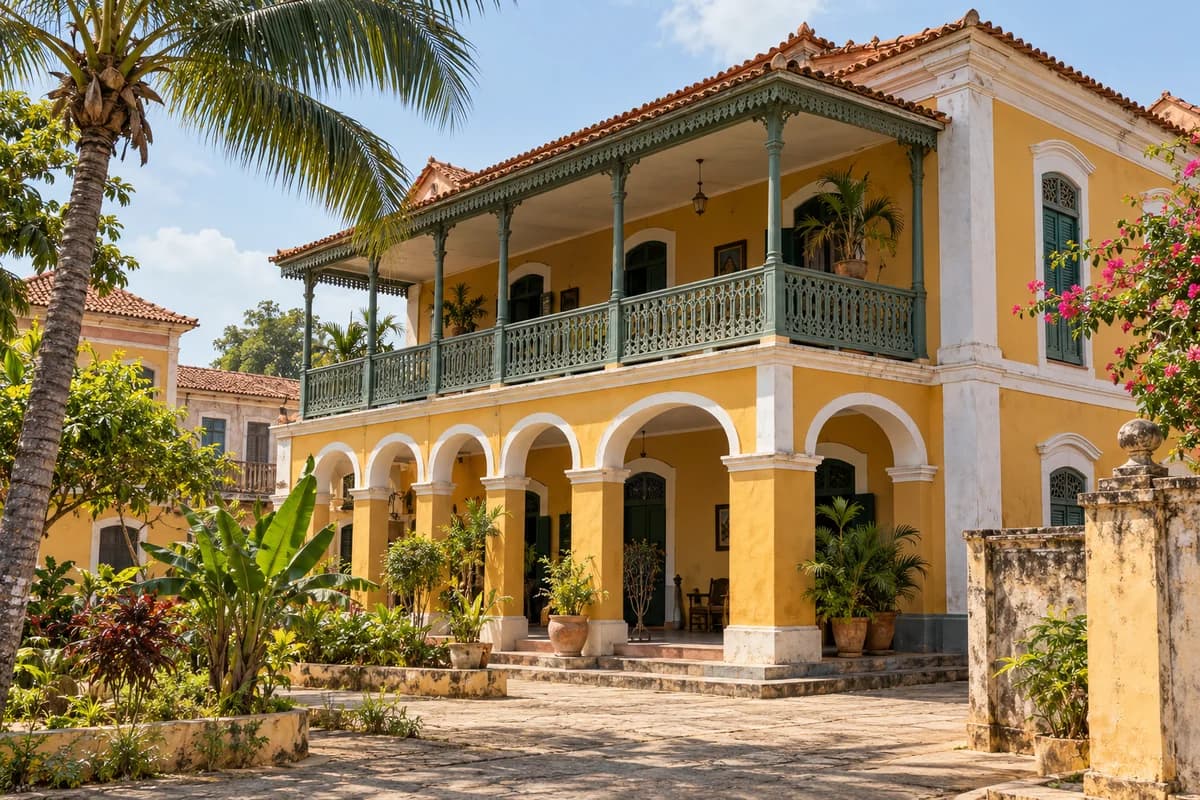
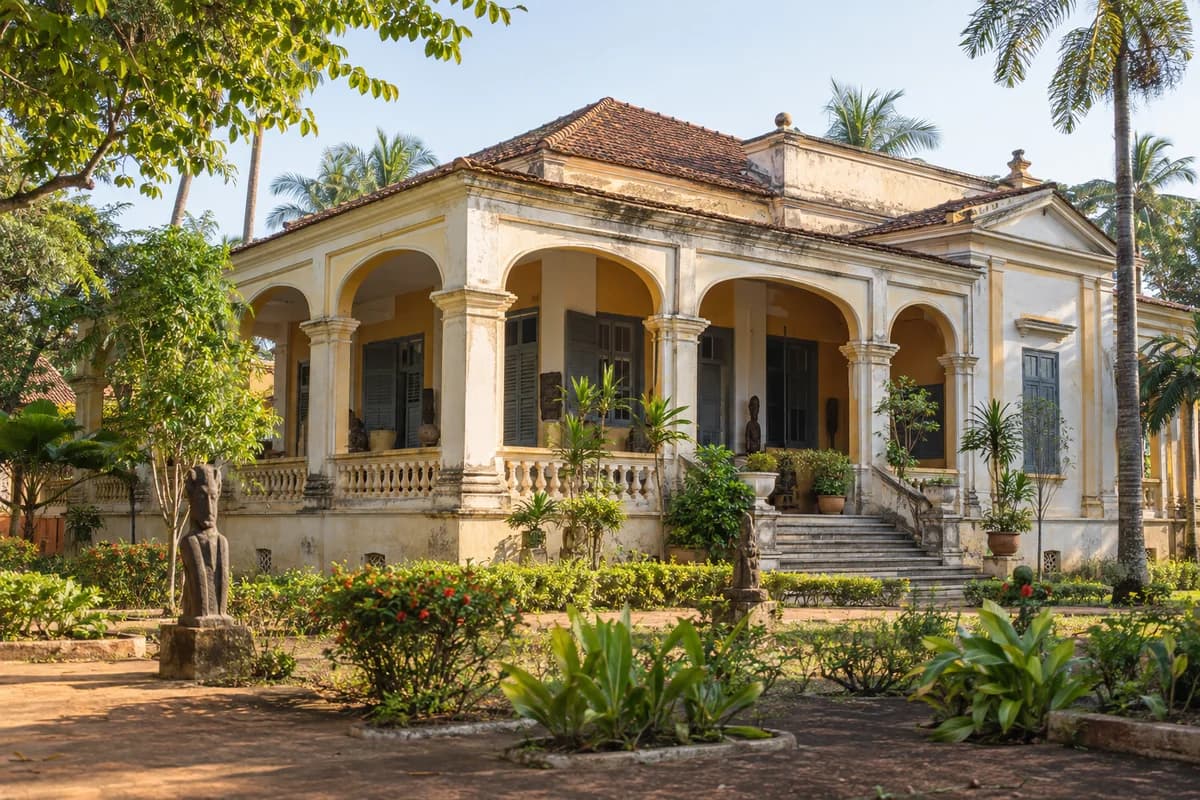
Housed in a colonial building of 1922, the Porto-Novo Ethnographic Museum gathers objects from most of Benin's peoples. Opened to the public in 1966, it has borne the name of Alexandre Sènou Adandé, the ethnographer behind its creation, since 1993. Its Gèlèdè masks make it a key stop for understanding Yoruba-Nago culture.
History of the Porto-Novo Ethnographic Museum
The museum grew out of colonial research. As early as 1949 the French Institute of Black Africa (IFAN) recorded the first collections. In 1957 they were installed in a colonial-style building constructed in 1922.
After independence, the Applied Research Institute of Dahomey (IRAD) continued collecting. The museum officially opened to the public in 1966. In 1993 it took the name of Alexandre Sènou Adandé, who died that same year.
The museum sees itself as the memory of the country's sociocultural groups. Its curator described it as a place "where people come to discover their culture, and themselves through it".
Alexandre Sènou Adandé
Born in Porto-Novo, Alexandre Sènou Adandé (died 1993) headed the ethnography department of IFAN and was a historian of African art. In that role he was entrusted with creating the ethnographic museum of his home town.
His date of birth varies between researchers: his family gives 7 May 1912, while official documents give 12 March 1913. His centenary was marked in Cotonou in May 2012.
His biographer Romuald Tchibozo notes that his name, given to a museum born under colonial rule, gives him an ambivalent status: the identity and role of the institution are still debated.
What to see
The galleries show objects from many of Benin's cultural groups:
- the Gèlèdè masks, specific to the Yoruba-Nago;
- Bètammaribè collections;
- from the Dendi and Bariba, weapons and initiation objects;
- from the Fon, royal objects;
- pieces from the Waama, Adja and Goun.
There are also wooden sculptures, musical instruments, bladed weapons and firearms, a forge and Fa divination trays.
Meaning and memory: the Gèlèdè
Gèlèdè is a Yoruba-Nago ceremony that honours the primordial mother and the role of women in society. It combines carved masks, dance and often satirical songs in the Yoruba language. According to UNESCO, it is the only known mask society also led by women.
"The Oral Heritage of Gèlèdè", shared by Benin, Nigeria and Togo, was proclaimed a Masterpiece of the Oral and Intangible Heritage of Humanity in 2001 and inscribed on the Representative List in 2008. The museum lets you see these masks, made for night-time dancing, at close range.
The ceremony takes place every year after the harvest and at important events. It is held at night on public squares, with singers, drummers and masked dancers. The masks often depict animals: the snake for power, the bird for the mothers' messenger. UNESCO also notes the threats to the practice, from lost craft skills to its reduction to tourist folklore.
Planning your visit
The museum is in central Porto-Novo, a few minutes from the Honmè Museum and the Da Silva Museum, so the three combine easily in a single day. A guided visit helps explain how the masks and ritual objects are used. Opening hours and prices are not published by any current official source, so check on site.
Opening hours and prices can change: check locally or with the tourist office before you go.
Sources
- Portail culturel du Bénin, Le Musée Alexandre Adandé, mémoire des ethnies du Bénin (copie archivée, 2017)
- Panafrika Tourisme, les musées du Bénin (copie archivée, 2015)
- Romuald Tchibozo, biographie d'Alexandre Sènou Adandé, Bérose (2019)
- UNESCO, Le patrimoine oral Gèlèdè
- Wikipédia, Musée ethnographique Alexandre Sènou Adandé
Checked in September 2026.