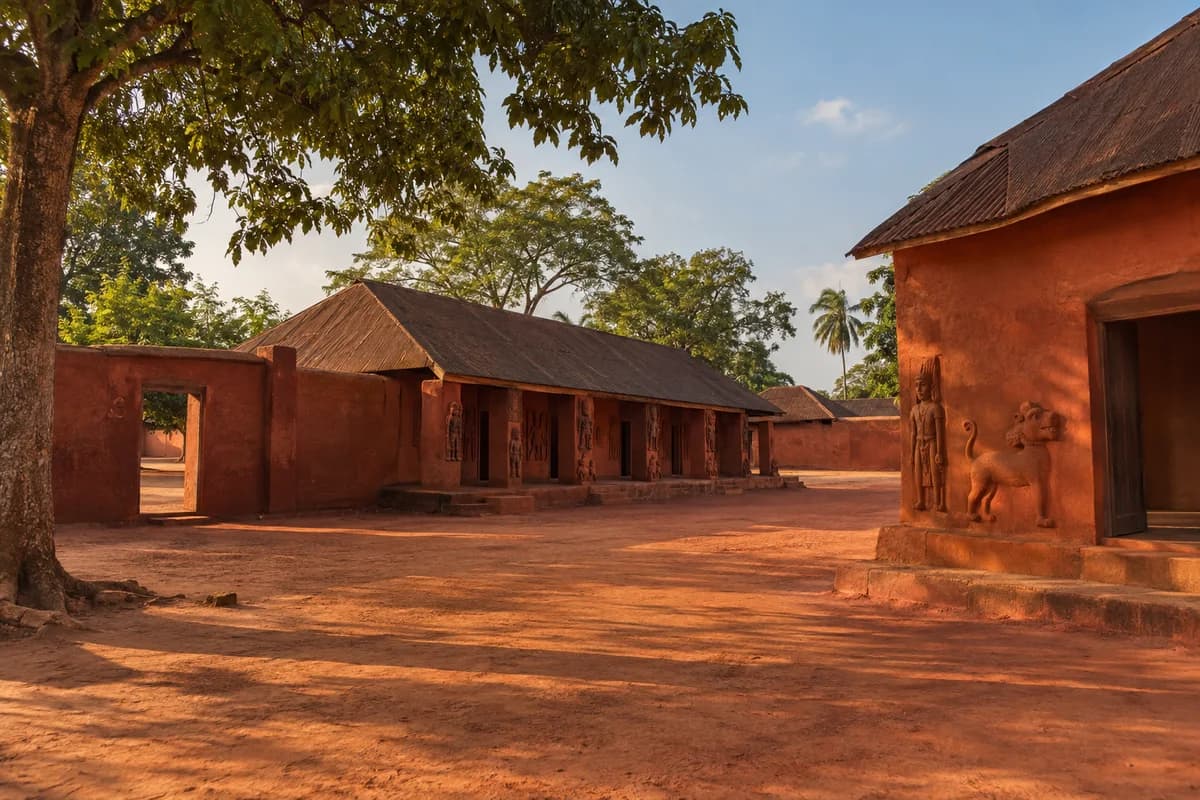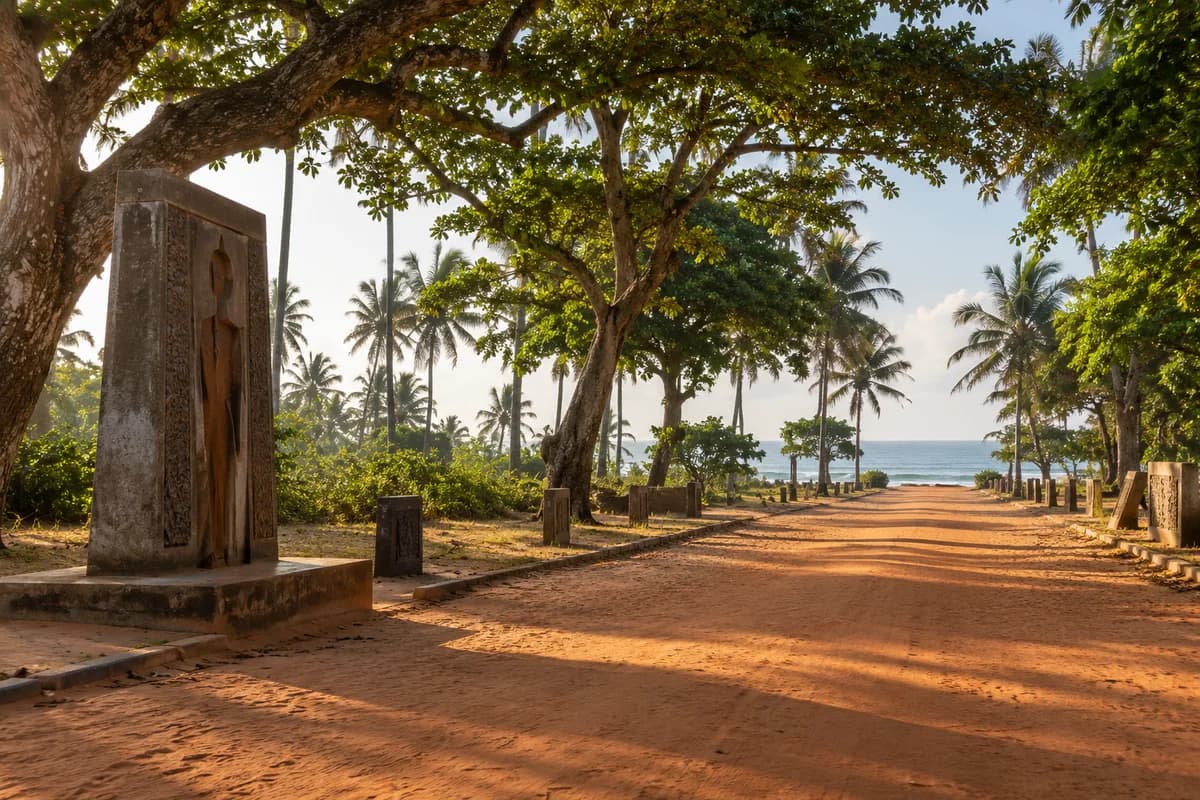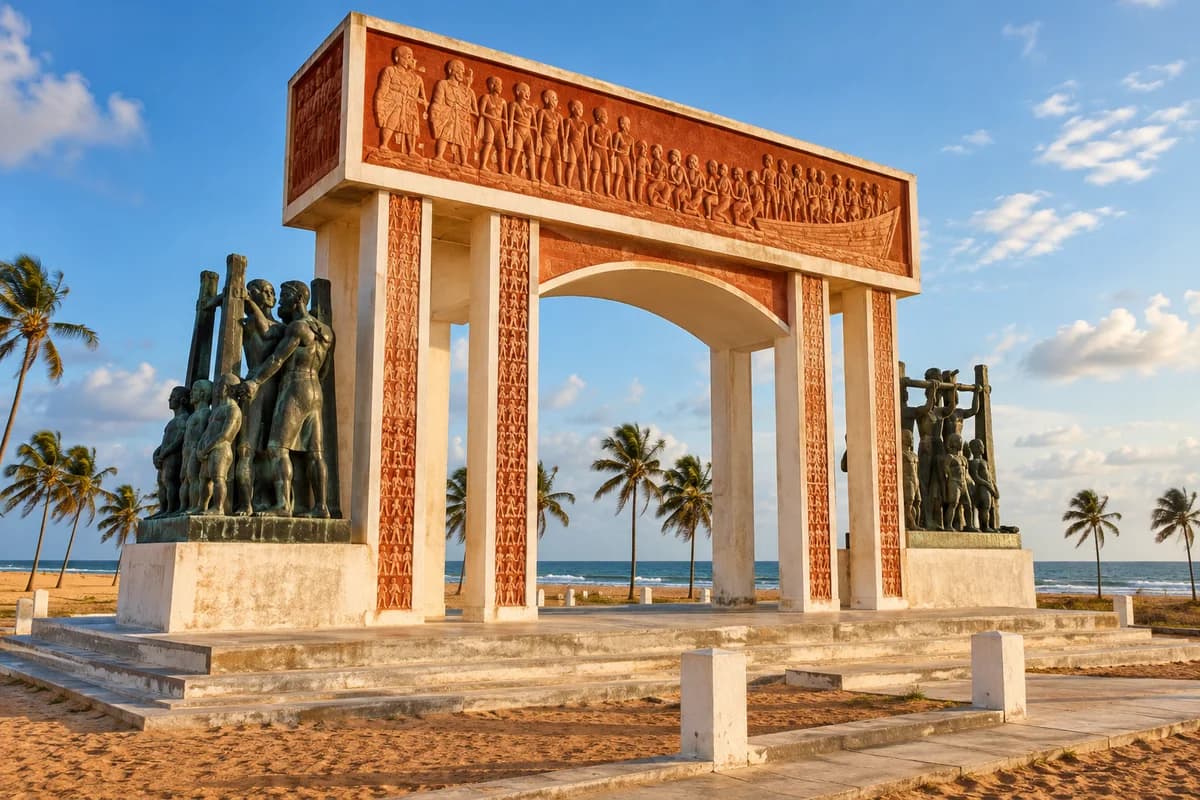
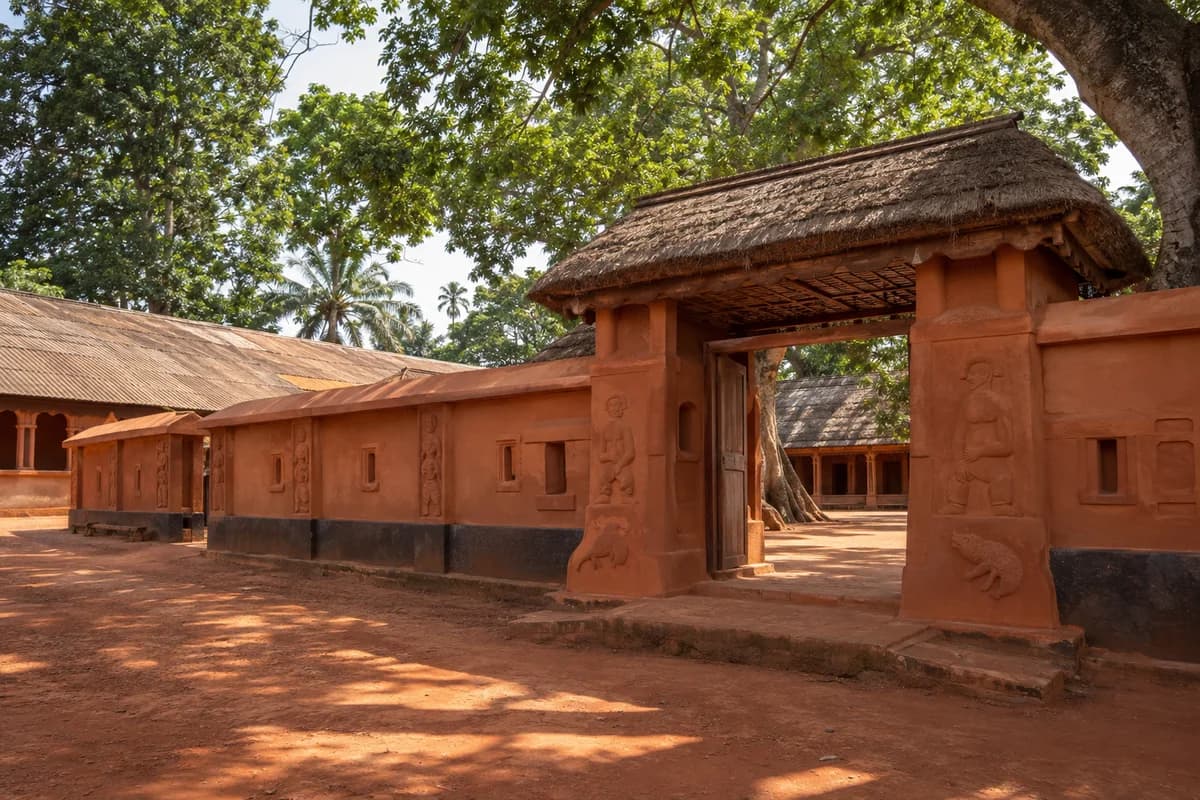
The royal palace of Allada stands at Togoudo, about three kilometres south-east of the modern town, on the site of the old capital. It recalls a kingdom that traded and negotiated with Europe from the 16th century. Allada also keeps the memory of Toussaint Louverture, whose paternal family is said to have come from this kingdom.
History of the kingdom of Allada
According to tradition, Adja migrants from Tado, on the Mono river, founded Allada under the leadership of Adjahouto. European sources call the kingdom Ardra. The Portuguese made contact around 1539, and trade with them is recorded in 1553.
The kingdom reached its height in the 17th century. King Toxonu sent an ambassador to Spain, who arrived in Madrid in February 1658, and Louis XIV received an ambassador from Allada around 1670. This power rested largely on the slave trade: about 125,000 captives were sold from Allada between 1640 and 1690.
Weakened by the rise of rival ports such as Ouidah, Allada was conquered in 1724 by King Agadja of Danxomè. Thousands of inhabitants were killed or enslaved. France set up a protectorate in 1894 and annexed the territory in 1904.
The royal palace of Allada at Togoudo
The old capital was not in the present-day town but at Togoudo (Togudo-Awute), about three kilometres to the south-east. This is where the royal palace stands, the seat of Allada's kingship.
The Beninese archaeologist Alexis Adandé carried out the first well-documented excavations there in 1981-1982. His doctoral thesis, Togudo-Awute, capitale de l'ancien royaume d'Allada, combines oral sources, written records and archaeological data to study this pre-colonial city.
After the conquest and the colonial period, the royal title was only restored in 1992. At the coronation on 2 December 1992 the sovereign took the reign name Kpodégbé, "the leopard has roared". The commune of Allada also has several other royal palaces.
Allada and Toussaint Louverture
Toussaint Louverture, a leading figure of the Haitian Revolution, was born into slavery around 1743 on the Bréda plantation in Saint-Domingue. He was the eldest son of Hippolyte, a captive from Allada.
In his memoirs, his son Isaac Louverture names Hippolyte's father, Gaou Guinou, as a son of the King of Allada. According to this account, Gaou Guinou would be Toussaint's grandfather. Other texts make Gaou Guinou Toussaint's father: the sources disagree, and this ancestry rests on family tradition.
A statue of Toussaint Louverture stands on the square named after him, at the northern exit of the town. For many Haitians, Allada is a "holy city" tied to their origins. The link between the two countries is thus written into the landscape of the town itself, a few kilometres from the old royal capital.
Did you know?
- Allada became the capital of the Atlantique department by Decree No. 2016-397 of 7 July 2016.
- During the conquest of 1724, more than 8,000 inhabitants of Allada were enslaved.
- A Haitian Vodou chant still invokes "Allada", a sign of the bond between the two shores of the Atlantic.
Planning your visit
Allada is about 54 km from Cotonou, and the Togoudo site three kilometres south-east of the town. The royal palace is a residence and a living place of worship: plan your visit, ideally with a local guide, and follow the court's protocol. No official opening hours or prices are published; ask on site or at the tourist office, and always ask permission before taking photographs.
Opening hours and prices can change: check locally or with the tourist office before you go.
Sources
- Wikipédia : Royaume d'Allada
- Wikipédia : Allada
- L'Emblème du jour : Allada, berceau des royaumes et des héros (16 octobre 2025)
- Wikipedia (EN) : Toussaint Louverture
- Wikipedia (EN) : Alexis Adandé
Checked in September 2026.