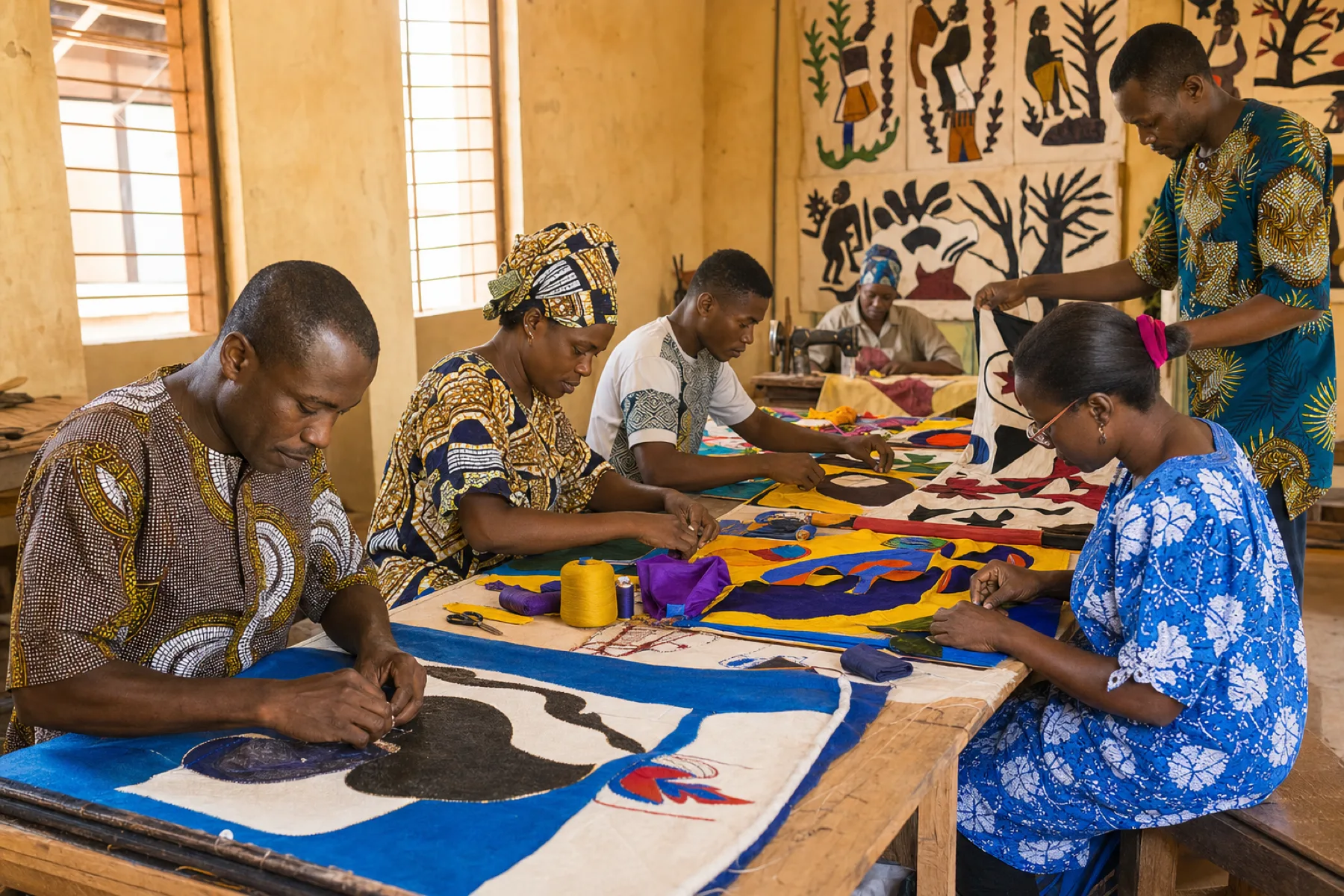
Vodun in Benin is neither folklore nor a curiosity: it is a religion in its own right, recognised by the State and practised by a large part of the population. Every January, the country celebrates it officially. This guide covers its origins, its deities, its national festival and the etiquette to follow.
Where does Vodun in Benin come from?
In the Fon language, the word "vodun" refers to a divine force that is invisible yet active. This belief system took shape in the Adja-Fon cultural area, between present-day Benin and Togo. Later, contact with the neighbouring Yoruba world enriched it. The Egungun cult and Fa divination, close to Yoruba Ifa, bear witness to these exchanges. To place these peoples on the map, read our guide to the languages spoken in Benin.
In the Kingdom of Dahomey, the kings of Abomey added the deities of conquered peoples to their own pantheon. Vodun therefore had a political side as well. For the background, see our History page and our guide to the Royal Palaces of Abomey.
Moreover, the Atlantic slave trade carried these beliefs across the ocean. They gave rise to Haitian vodou and shaped Brazilian candomblé, in particular its "jeje" branch. That is why many people of African descent now travel to Benin in search of their ancestors.
Beliefs and main deities
Vodun recognises a creator God, often called Mawu and paired with Lisa. The vodun themselves are intermediary forces, linked to nature or to the ancestors. In practice, each deity has its own convents, priests, taboos and songs. The best known include:
- Legba, guardian of thresholds and messenger between humans and the other deities;
- Dan, the serpent, a symbol of continuity and prosperity, honoured in Ouidah as Dangbé;
- Hèviosso, deity of thunder and justice;
- Sakpata, vodun of the earth, long associated with diseases such as smallpox;
- Gou, vodun of iron, the forge and war;
- Mami Wata, deity of the waters, very present along the coast.
Masks also play a central role. For example, the Egungun embody the dead returning to visit the living. Meanwhile, the Zangbéto, guardians of the night, keep order in the villages. As for the Guèlèdè of the Yoruba-Nago communities, UNESCO proclaimed it a masterpiece of oral heritage in 2001, then added it in 2008 to its Representative List of intangible heritage.
From 10 January to the festival of traditional religions
Official recognition of Vodun in Benin dates back to the 1990s. First, the "Ouidah 92" festival, held in February 1993, brought together followers and the diaspora. Then, after a first celebration under President Nicéphore Soglo, Law No. 97-031 of 20 August 1997 set the annual festival of traditional religions on 10 January.
For more than twenty-five years, 10 January remained the great date of vodun. However, Law No. 2024-32 of 2 September 2024 changed the rule. The festival now falls on the second Friday of January, and the preceding Thursday is also a paid public holiday. Here is the recent calendar:
- 2024: first Vodun Days, on 9 and 10 January;
- 2025: festivities from 9 to 11 January;
- 2026: festivities from 8 to 10 January, with 8 and 9 January as public holidays;
- 2027: festivities from 2 to 9 January, but only 7 and 8 January will be public holidays.
Experiencing the Vodun Days in Ouidah
Since 2024, the State has organised the Vodun Days in Ouidah, the historic city of vodun. The programme combines ceremonies in squares and convents, mask outings, a parade of dignitaries, beach concerts and a craft village. The new Door of No Return, unveiled in December 2025, is also one of the highlights of the route.
Attendance grows with each edition. As a result, the 2027 edition will last eight days, so that the diaspora can extend its stay. Read our article Tourism: « Bénin, un monde de splendeurs » on this. To explore the town beyond the festival, follow our guide to the Ouidah Slave Route, and add the Temple of Pythons and the sacred forest of Kpassè.
Practical tips for January
- Book your accommodation months ahead, because Ouidah fills up quickly.
- Apply for your visa as soon as your dates are set, via our Entry visa (e-Visa) page.
- Check your vaccinations too, including yellow fever: see vaccines for Benin.
- Bring water, a hat and cash in CFA francs.
Attending a ceremony with respect
Vodun in Benin is above all a living religious practice. Some ceremonies are public, while others are for initiates only. So a few simple rules help avoid misunderstandings:
- always ask permission before photographing a person, an altar or a convent;
- do not touch sacred objects and respect restricted areas;
- dress modestly and follow your guide's instructions;
- be aware that a contribution may be requested to enter or to film.
Finally, leave colonial-era clichés behind. Vodun has nothing to do with evil magic: it carries ethics, a traditional pharmacopoeia and family memory. Our Culture page places it among the other treasures of Beninese heritage.
Frequently asked questions
Is 10 January still a public holiday?
Not always. Since the 2024 law, the public holidays are the second Friday of January and the Thursday before it. So 10 January only falls on one of them in some years.
Do you need to be an initiate to attend the Vodun Days?
No, because the public festivities are open to everyone, including foreign visitors. However, some rites take place in convents that are closed to the public.
Vodun, vodoun or voodoo: which spelling?
In fact, all three exist. In Benin, people mostly write "vodun" or "vodoun", which are closer to the Fon pronunciation. The word "voodoo" is common in English, but it often carries stereotypes.
What is the link with Haitian vodou?
Haitian vodou largely descends from the cults of the Bight of Benin, carried by deported captives. It then evolved through contact with other African traditions and with Catholicism.
Planning a trip for the next celebrations of Vodun in Benin? Honorary Consulate of Benin in Liège is here to help: apply for your electronic visa on the official portal and, for any question, write to us from the Contact page.
Sources
- Government of Benin: Vodun Days 2026 in Ouidah (in French)
- Official website: Vodun Days, international celebration of vodun
- Bénin Tourisme: Vodun Days 2026 programme
- Wikipedia: National vodun festival (in French)