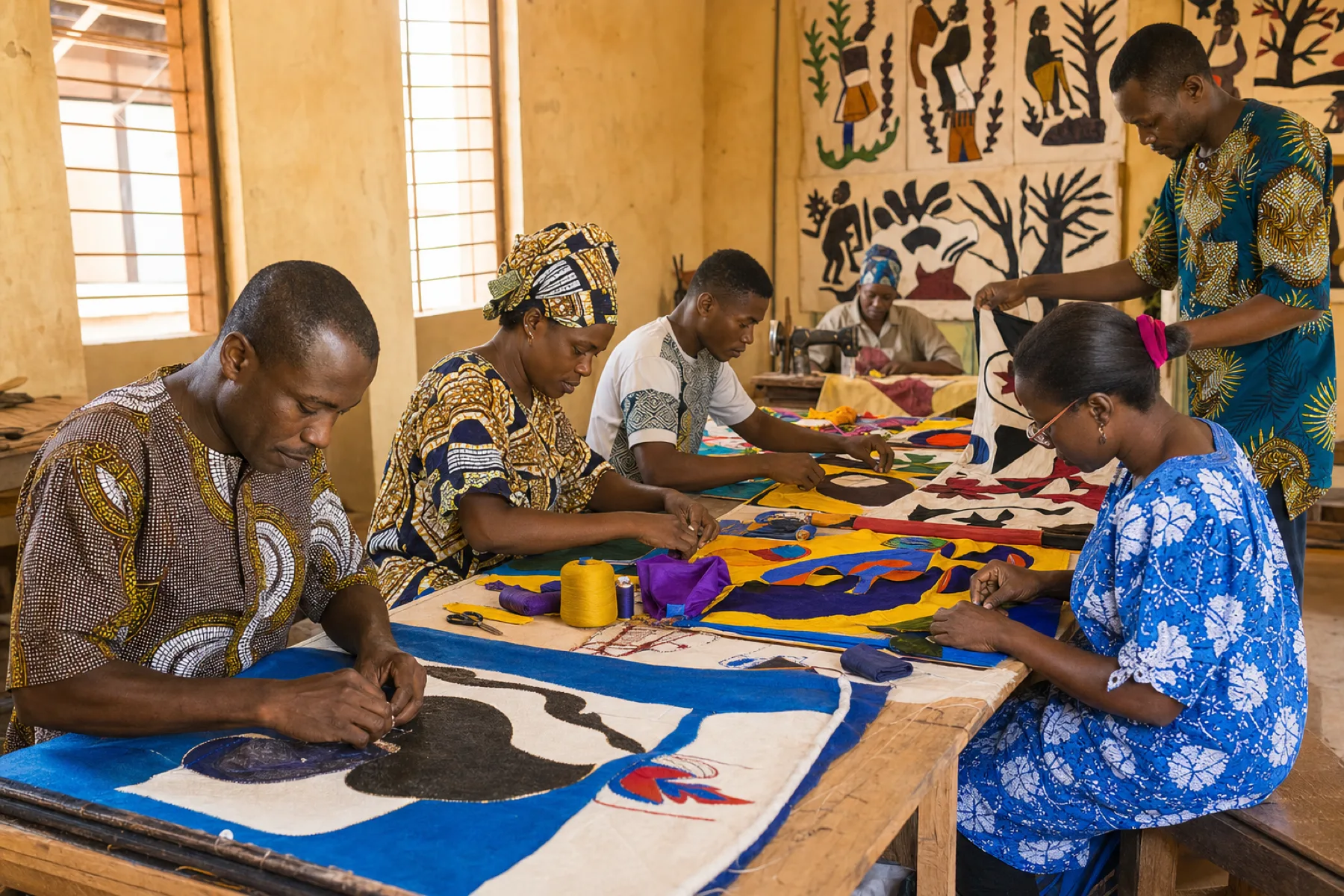
The languages spoken in Benin form a remarkable mosaic: depending on the survey, the country has between fifty and sixty languages within a mid-sized territory. French remains the official language. Yet at the market, at home or on the radio, you will often hear Fon, Yoruba, Bariba or Dendi instead. This guide helps you find your way, whether you are planning a trip or want to pass a language on to your children.
French, the official language
The Constitution of 11 December 1990 makes French the official language of the Republic. It is therefore the language of government, the courts and schools. As a result, all your consular documents, from the passport to the consular card, use French.
The same Constitution also guarantees every community the freedom to use its own language, both spoken and written. In practice, most Beninese people therefore speak at least two languages: French and one or more national languages.
The main languages spoken in Benin
According to data compiled by Université Laval, Fon comes clearly first: nearly a quarter of the population speaks it. Next come Yoruba (8%), Bariba (7.9%), Adja (6.2%) and Goun (5.5%). Here is where you will hear them:
- Fon: mainly in the south and centre, notably around Abomey and Cotonou. It was also the language of the former kingdom of Dahomey.
- Yoruba, also called Nago: in the south-east and centre, along the border with Nigeria.
- Bariba (Baatonum): the main language of the north-east, especially in Borgou.
- Adja: in the south-west, near the border with Togo.
- Goun: around Porto-Novo, and close to Fon.
- Dendi: in the far north, where it often serves as a trade language.
- Ditammari: in the north-west, around the Atacora.
In addition, Fulani communities speak Fulfulde across much of the north. To place these regions, see our map of the departments of Benin.
Several language families
These languages do not all belong to the same family. In the south, Fon, Goun, Adja, Mina and Ayizo form the Gbe group, so their speakers often partly understand one another. Yoruba, however, belongs to another branch, known as Yoruboid. In the north, Bariba and Ditammari are Gur languages, while Dendi is part of the Songhay languages. As for Fulfulde, it belongs to the Atlantic group. As a result, travelling from the south to the north of the country can feel like entering a completely different linguistic world. Even so, French and a few regional trade languages help people understand each other across these divides.
Languages that cross borders
Several languages spoken in Benin reach far beyond the country. For example, Yoruba has tens of millions of speakers in Nigeria. Likewise, Adja and Mina are also spoken in Togo, while Dendi and Bariba extend into Niger and Nigeria. These languages remind us that today's borders date from the colonial era, whereas peoples moved across the region long before.
This history also shows in the culture. Vodun, for instance, uses Fon and Yoruba in its songs and rituals. To learn more, read our article on vodun and its national festival in January and our page on the culture of Benin.
Languages spoken in Benin in daily life
At school and in government
Teaching takes place in French, as our guide to the education system in Benin explains. So national languages have a limited place in class. According to Université Laval, only 6.5% of Beninese people can read and write a national language.
In digital public services
However, national languages are gaining ground online. For example, the ePASS passport renewal platform offers video guides in French, Yoruba, Fon and Dendi.
Passing on a Beninese language in Belgium
For the diaspora, language remains a strong bond with family back home. A few simple habits help to pass it on:
- first, speak the language at home, even just a few sentences a day;
- then share songs, tales and proverbs;
- next, use stays in Benin to practise with grandparents;
- finally, join the community's cultural activities.
Our guide to the Beninese diaspora in Belgium describes the role that cultural associations play.
Frequently asked questions
What is the most widely spoken language in Benin?
Fon is the most widely spoken national language, used by nearly a quarter of the population. However, French remains the only official language.
How many languages spoken in Benin are there?
Between fifty and sixty, depending on the survey. The gap mostly comes from how each survey separates a language from a dialect.
Do I need a local language to travel in Benin?
No, French is enough in towns and for services. Still, a few words of Fon or Yoruba always please your hosts.
Is Fon a written language?
Yes. Like the other national languages, it uses the Latin alphabet, with a few extra letters such as ɛ, ɔ and ɖ.
In short, the languages spoken in Benin reflect the richness of its history. For your formalities, all handled in French, Honorary Consulate of Benin in Liège remains available through the contact page.
Sources
- Université Laval: language planning in Benin
- Glottolog: entry for the Fon language