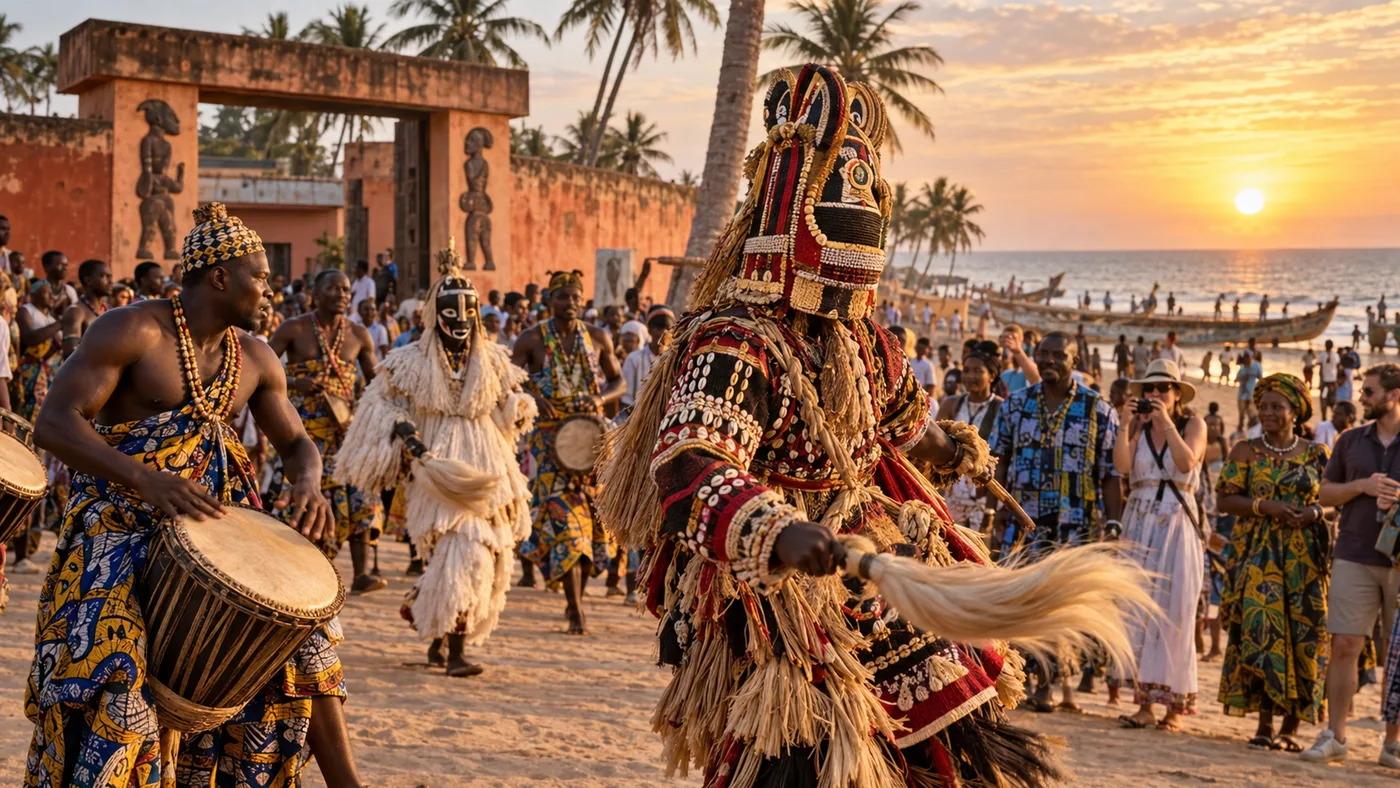
What to see in Benin on a first trip? The country stretches for nearly 700 kilometres, from the Atlantic Ocean to the Niger River. So in two weeks you can move from a lake village to a royal palace, then from a lagoon to sacred hills. Here are 15 must-visit places, grouped by region, with approximate travel times from Cotonou.
What to see in Benin: the 15 places at a glance
| Place and time from Cotonou | Why go |
|---|---|
| 1. Cotonou | Above all for Dantokpa market and the Amazon esplanade |
| 2. Ganvié (45 min, then by boat) | In particular Africa's best-known lake village |
| 3. Porto-Novo (1 h) | The capital, its museums and also its Afro-Brazilian mosque |
| 4. Ouidah (1 h) | Notably the Slave Route and the Door of No Return |
| 5. Route des Pêches (30 min) | Beaches, then fishing villages all the way to Ouidah |
| 6. Grand-Popo (1 h 30) | A calm seaside town, so ideal for a break |
| 7. Bouche du Roy (1 h 45) | The Mono River mouth, also a mangrove area to explore by canoe |
| 8. Lake Ahémé and Possotomè (1 h 45) | Fishing villages, but also a mineral spring |
| 9. Abomey (2 h 30) | The royal palaces, World Heritage since 1985 |
| 10. Dassa-Zoumè (3 h) | Granite hills, as well as a major Marian pilgrimage |
| 11. Kétou (3 h) | An ancient Yoruba kingdom, notably its Akaba Idéna gate |
| 12. Natitingou (8 h) | Capital of the Atacora, but check the security advice first |
| 13. Tata Somba | Fortified tower houses, also called takienta |
| 14. Kota and Tanougou falls | Waterfalls, at their best after the rainy season |
| 15. Pendjari National Park | Big game, but only if official advice allows it |
Cotonou, Ganvié and Porto-Novo: the south-east
First stop: Cotonou, the economic capital. Dantokpa market, on the lagoon shore, is one of the largest open-air markets in West Africa. Then the Amazon esplanade and its monumental statue make a pleasant stop at the end of the day.
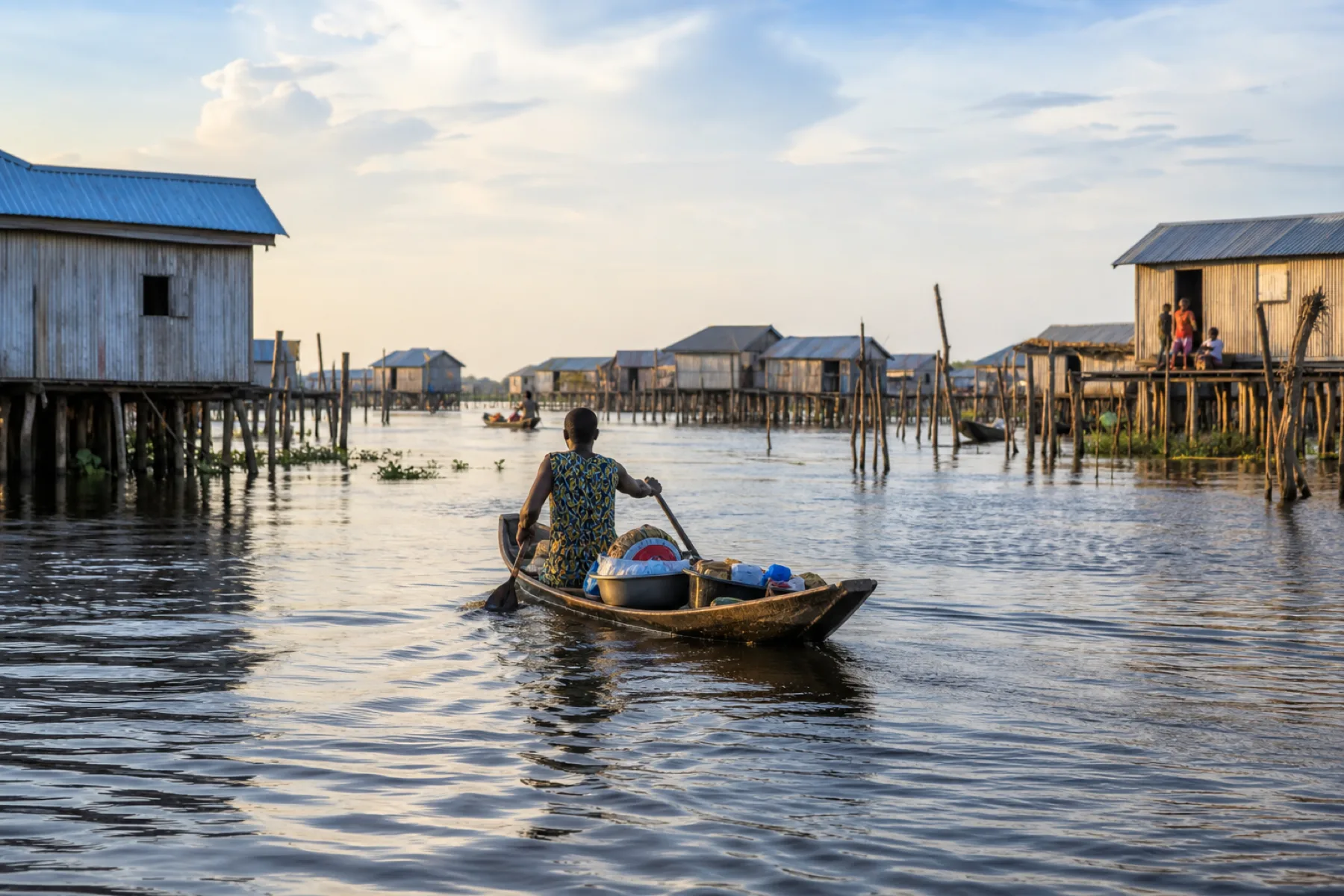
About twenty kilometres north, the Abomey-Calavi jetty leads to Ganvié, on Lake Nokoué. The Tofinu people built this town on stilts because the water protected them from slave raids. Our feature on the Ganvié lake village explains how to plan a respectful visit.
Finally, Porto-Novo, the official capital, lies some thirty kilometres to the east. Above all, visit the Honmé Museum in King Toffa's former palace, then the Great Mosque with its Afro-Brazilian colours. The Garden of Plants and Nature also offers a shady break.
Ouidah and the west coast
About forty kilometres from Cotonou, Ouidah is a key stop if you wonder what to see in Benin. Indeed, the Slave Route leads to the Door of No Return, facing the ocean. In town, the Temple of Pythons and the sacred forest of Kpassè show the place of Vodun. For more, read our guide to Ouidah and the Slave Route.
To reach Ouidah, take the Route des Pêches if you can, as it runs past beaches and fishing villages. Further west, Grand-Popo charms visitors with its calm, so plan a quiet night there. From there, a canoe trip takes you to the Bouche du Roy, where the Mono River meets the ocean. This delta belongs to a UNESCO biosphere reserve that Benin shares with Togo.
As for Lake Ahémé, it hosts fishing villages and the small town of Possotomè, known for its mineral spring. However, the sea is dangerous all along the coast, so only swim where locals tell you it is safe.
Abomey, Dassa and Kétou: the historic heart
What to see in Benin to understand its history? Abomey, without a doubt. The palaces of the kings of Danxomè, which UNESCO added to the World Heritage List in 1985, cover 47 hectares. Our article on the Royal Palaces of Abomey tells their story.
Further north, Dassa-Zoumè nestles among granite hills. Every year, in late August, the Marian grotto of Arigbo draws pilgrims from across the country. To the east, near the Nigerian border, Kétou keeps the memory of an ancient Yoruba kingdom, notably through the Akaba Idéna gate.
The north: Atacora and Pendjari, subject to official advice
The north also offers spectacular landscapes. Around Natitingou, the Tata Somba of the Batammariba form a unique type of home, close to Togo's Koutammakou, which UNESCO listed in 2004. The Kota and Tanougou falls and Pendjari National Park complete the picture.
However, these sites lie in areas where the Belgian government's travel advice (in French) strongly or even formally advises against travel. So check it before any decision, because the situation changes. Our page on the geography of Benin will help you locate these regions.
Planning your route
In ten days, a tour of the south covers the essentials of what to see in Benin. For example, allow two days for Cotonou and Ganvié, then one day for Porto-Novo. Next, plan two days in Ouidah, two days in Grand-Popo and around Lake Ahémé, and finally two or three days for Abomey and Dassa. A local driver-guide will save you time and open many doors.
Before you leave, read our guide on how to travel to Benin from Belgium. Also remember your e-visa, which you should only request on the official portal.
Frequently asked questions
How many days do I need to visit Benin?
Allow at least ten days if you cover the south and centre. With two weeks, you travel at a gentler pace and can add a few stops by the water.
What is the best-known place in Benin?
In fact, Ganvié and Ouidah draw the most visitors. Still, the Royal Palaces of Abomey remain the country's most symbolic historic site.
Can I travel to northern Benin?
Belgian travel advice currently advises against travel to a large part of the north. So check its latest update before you book anything.
What is the best season for this tour?
The dry season, from November to March, suits it best. For details, read our guide to the best time to visit Benin, month by month.
Now you know what to see in Benin: all that remains is to pick your stops. For any practical question, write to Honorary Consulate of Benin in Liège, and also explore our Visiting Benin page.
Sources
- Agence Bénin Tourisme: Benin's official tourism portal
- UNESCO: Royal Palaces of Abomey, World Heritage
- Belgian FPS Foreign Affairs: general security in Benin (French)