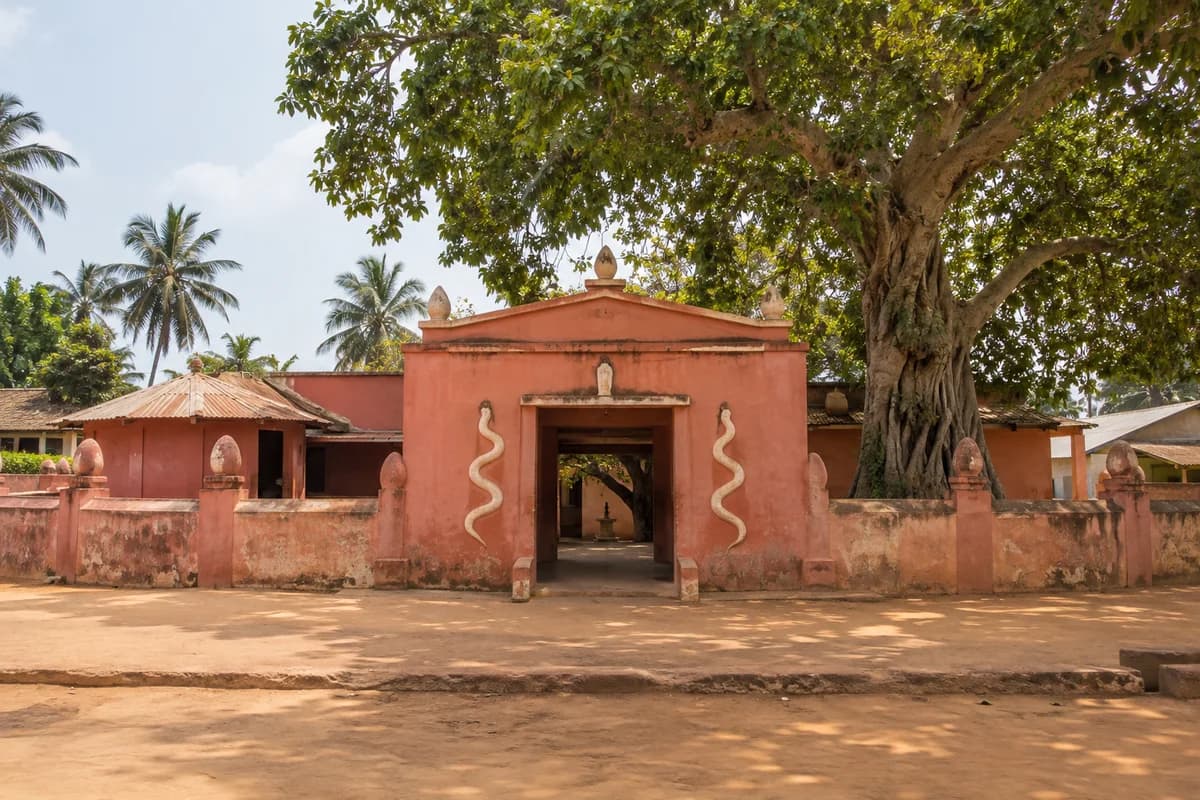
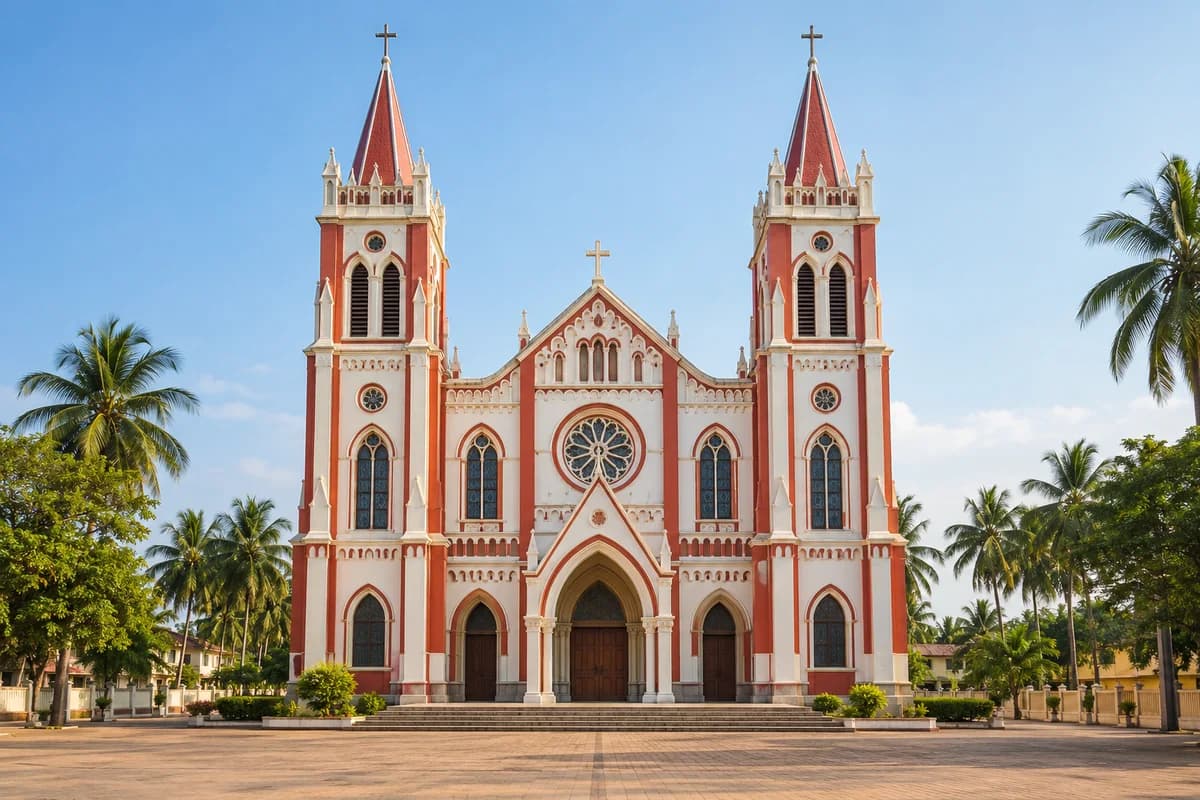
In the heart of the historic town, Ouidah Basilica stands opposite the Python Temple. Built between 1903 and 1909 on the initiative of Bishop Louis Dartois, it was raised to the rank of minor basilica in 1989. It bears witness to the long history of the Catholic Church in Benin and to the closeness of faiths in the town.
History of Ouidah Basilica
The story of the building begins before it was built. In 1861 the first missionaries of the Society of African Missions arrived in Ouidah. That date marks the start of Catholic evangelisation in the country. The Church in Benin celebrated its 150th jubilee in 2011.
In the early twentieth century, Bishop Louis Dartois, the first Vicar Apostolic of Dahomey, decided to build a large church in Ouidah. The foundation stone was laid in 1903. The building was completed and consecrated in 1909.
For many years the church served as the cathedral of the apostolic vicariate. It lost that title in the mid-1950s, when the see left Ouidah. Today it belongs to the Archdiocese of Cotonou.
On 9 November 1989, during the pontificate of John Paul II, it was raised to the rank of minor basilica. The Holy See grants this honorary title to churches of particular importance.
What to see
The basilica draws on Neo-Gothic architecture, the style of many churches built in Europe during the same period.
Its façade looks out onto the Python Temple, a Vodun shrine in the Dangbexu quarter. The two buildings face each other across the square. This closeness is often presented as a symbol of religious tolerance in Ouidah.
- The façade and forecourt, opposite the Python Temple.
- The nave, an active place of worship where the parish holds its services.
- The surrounding old town, best explored on foot.
Ouidah is also home to the Saint-Gall Major Seminary, where many priests have been trained. Cardinal Bernardin Gantin, a former seminarian, is buried in its chapel.
Benedict XVI's visit in 2011
From 18 to 20 November 2011, Pope Benedict XVI made an apostolic journey to Benin. The visit coincided with the jubilee of 150 years of evangelisation in the country.
On 19 November 2011 he travelled to Ouidah. He first prayed at the tomb of Cardinal Gantin at the Saint-Gall seminary and addressed priests, religious and seminarians. He then went on to the basilica.
In the basilica he signed the apostolic exhortation Africae munus, the outcome of the Synod of Bishops for Africa held in October 2009. The text deals with reconciliation, justice and peace. The next day it was handed to the presidents of the African bishops' conferences at the stadium in Cotonou.
Meaning and memory
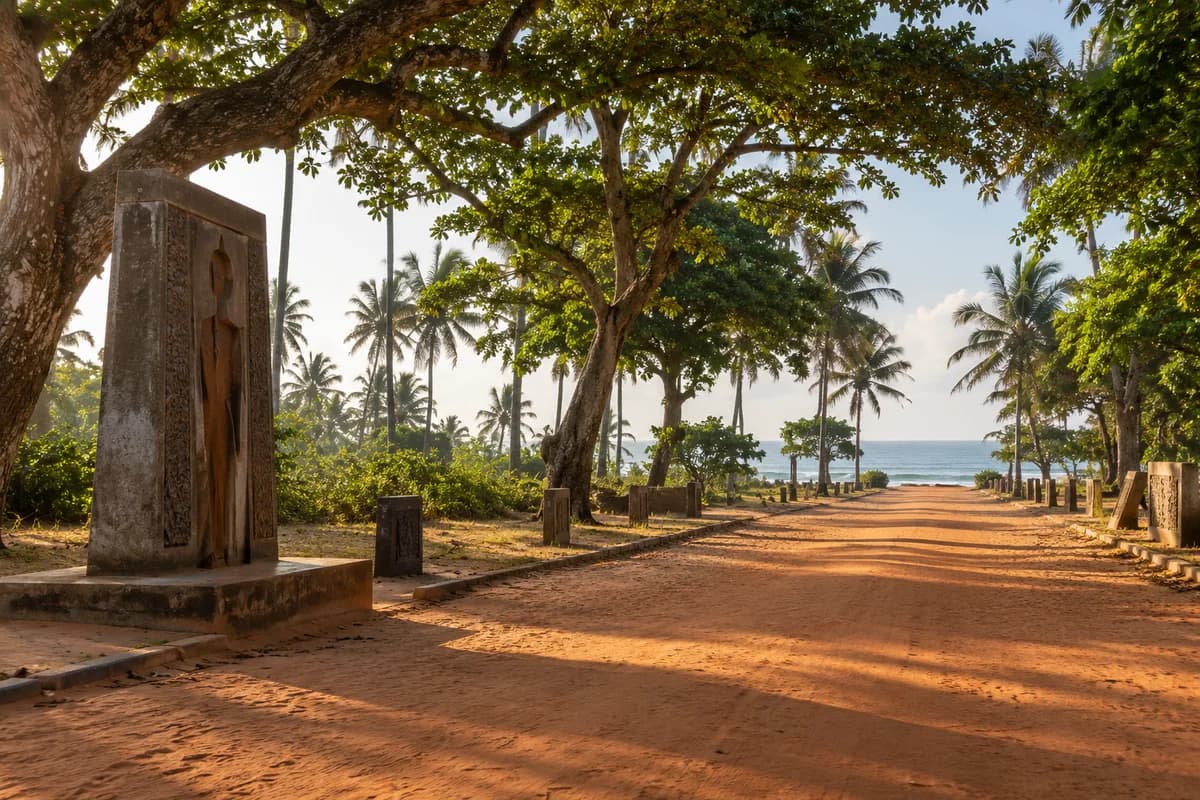
In his address at the basilica, Benedict XVI referred to the nearby Door of No Return and the Door of Forgiveness. He saw them as a reminder of the duty to fight every form of slavery. Ouidah was indeed one of the major ports of the Atlantic slave trade.
He also made an appeal that many still remember: “We must never tire of seeking the paths of peace!”
For the Catholic Church, the basilica is the place where the country's missionary history took root. In 2016 it was among the jubilee churches designated for the Holy Year of Mercy.
Did you know?
The first missionaries of the Society of African Missions landed at Ouidah on 18 April 1861. They were the Italian priest Francesco Borghero and the Spanish priest Francisco Fernandez. A third priest, Father Louis Edde, had died on the journey.
The Society of African Missions had been founded in Lyon in 1856 by Bishop Melchior de Marion Brésillac. In 1860 the Holy See entrusted it with the new Apostolic Vicariate of Dahomey, with Father Borghero as interim superior.
Other missionaries joined them in the following months. Every 18 April the Church in Benin marks the anniversary of this arrival, the starting point of continuous evangelisation in the country.
Planning your visit
The basilica is an active place of worship. Dress modestly, with shoulders and knees covered, and keep quiet during Mass. Ask before photographing worshippers. The Python Temple opposite is visited separately; it is a sacred Vodun site where you should follow the guardians' instructions. No official opening hours are published online: check with the parish or the local tourist office.
Opening hours and prices can change: check locally or with the tourist office before you go.
Sources
- Wikipédia : Basilique de l'Immaculée-Conception de Ouidah
- GCatholic : Basilique de l'Immaculée Conception, Ouidah
- Vatican : discours de Benoît XVI à la basilique de Ouidah, 19 novembre 2011
- Église catholique en France : voyage de Benoît XVI au Bénin
- SMA Ireland : Beginnings of the Church in Bénin
- Ouadada : le temple des Pythons de Ouidah
Checked in September 2026.