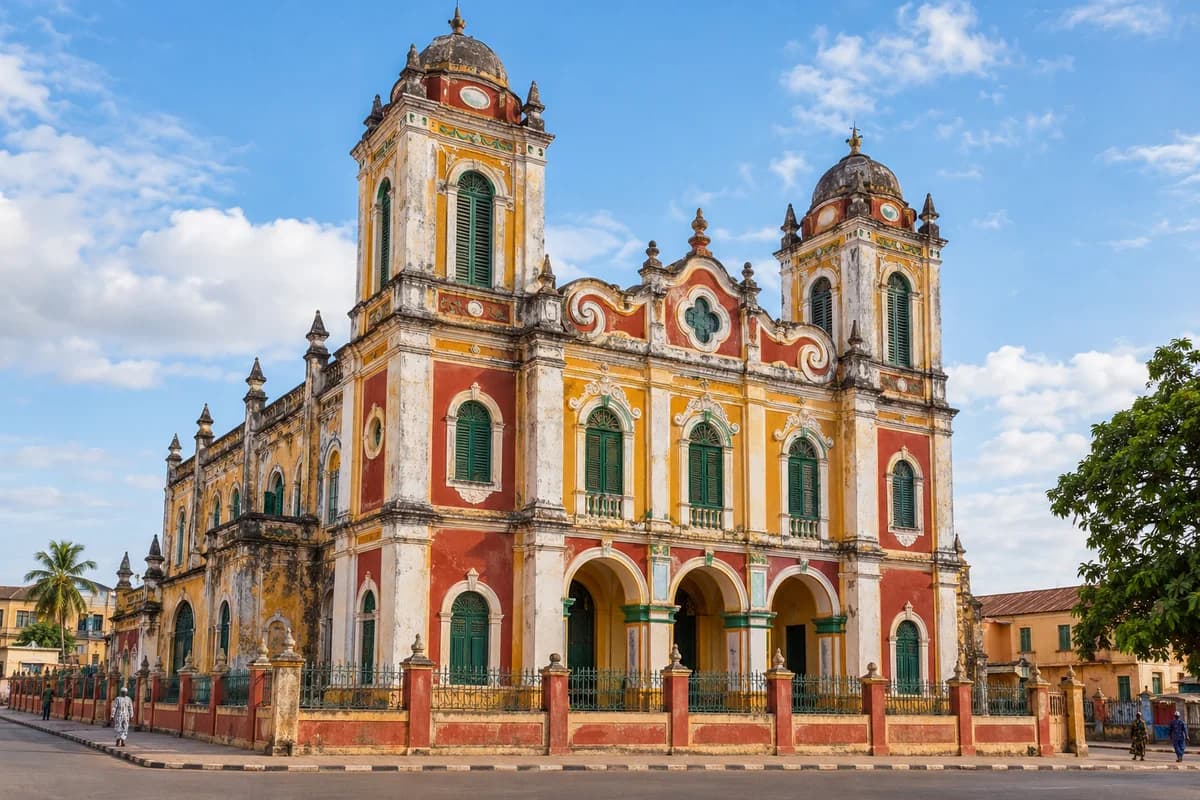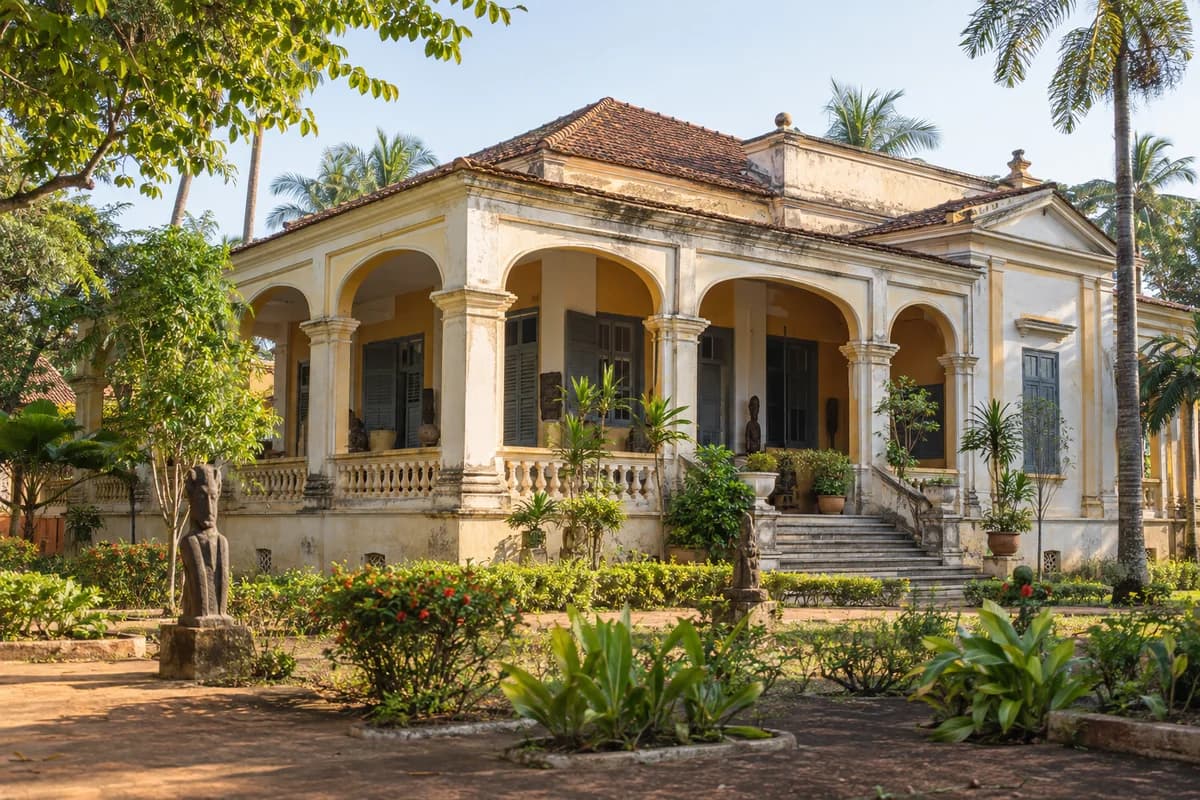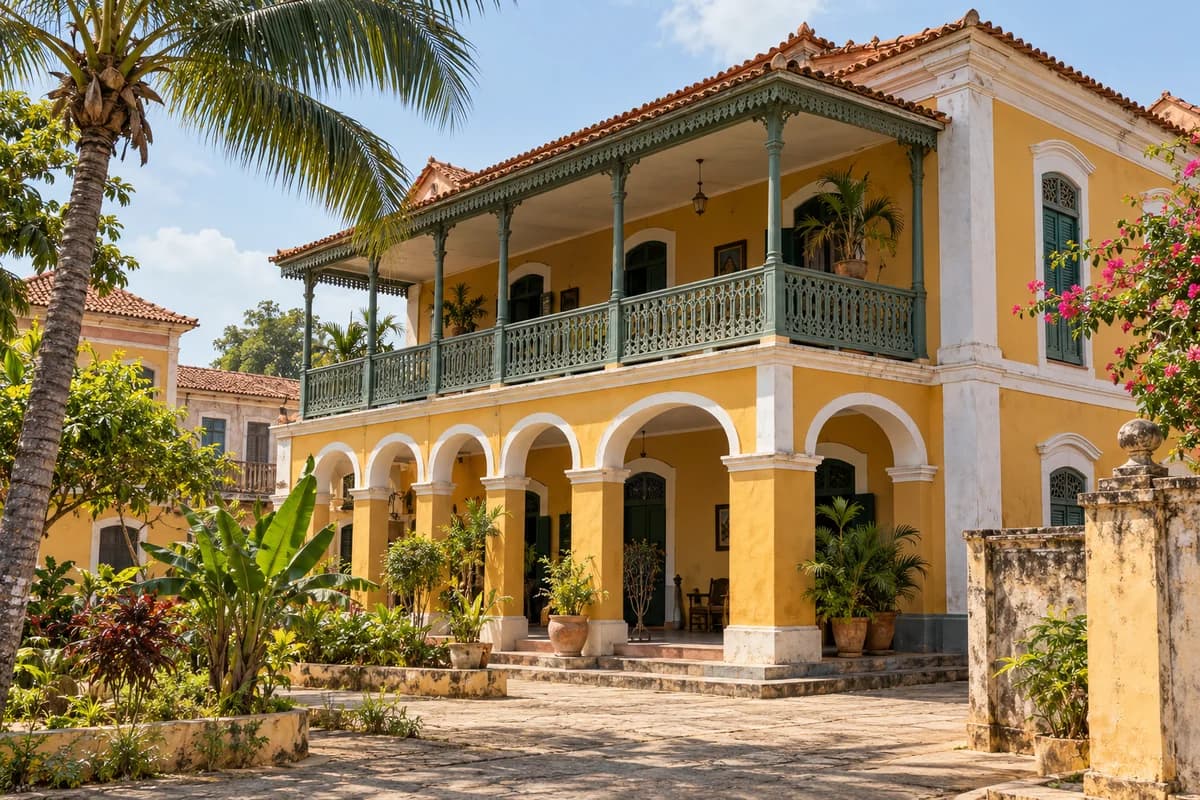
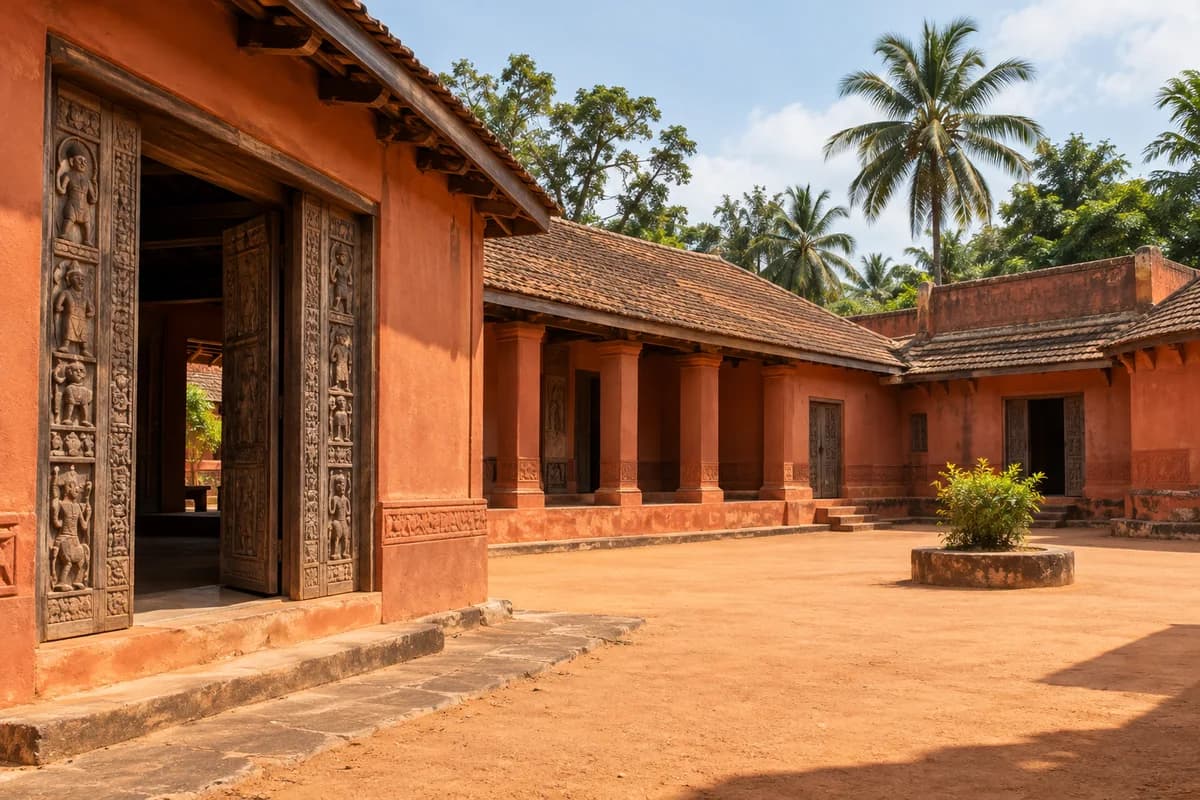
In the heart of the Avassa district, King Toffa's Palace housed the court of the kings of Hogbonou, the old name of Porto-Novo. Toffa reigned here from 1874 to 1908, at a turning point between independent kingdom and French colony. Since 1988 the palace has been the Honmè Museum, and it belongs to the "old quarters and Royal Palace" site on Benin's UNESCO Tentative List.
History of King Toffa's Palace
Porto-Novo has three names. The Goun and Adja call it Hogbonou or Xogbonou, the Yoruba Adjatchè, and Portuguese sailors named it Porto-Novo in the 18th century. According to tradition, the kingdom was founded by Tè-Agbanlin, a prince who came from Allada after a succession dispute.
Toffa, son of King Sodji, had to flee to Tori and then Lagos when Mikpon seized power in 1864. He returned to Porto-Novo with support from Dahomey and was enthroned on 16 September 1874. To free himself from his neighbours, he signed a protectorate treaty with France on 4 April 1882. His father Sodji had already concluded a first agreement of this kind in 1863.
In 1889 a raid from Dahomey struck the town and the palace was looted. Toffa then sided firmly with France. Porto-Novo served as a base for the wars against Dahomey between 1890 and 1894. When the king died on 7 February 1908, the town was annexed to the colony of Dahomey. Kingship survived as a chieftaincy until 1976, when a succession dispute brought it to an end.
What to see
The word Honmè means "inside the gate" and, by extension, a palace. The complex covers about 2.5 hectares. It is a true walled city, enclosed by a wall more than two metres high with four entrances facing the cardinal points.
The palace follows the impluvium model of the Yoruba palaces of Ilé-Ifè: low buildings arranged around inner courtyards. The visit leads in particular to:
- the king's courtyard and the queens' courtyard;
- the queen mother's courtyard;
- the initiation courtyard;
- the council, justice and people's courtyards.
Honmè is first and foremost a site museum, but it also holds about 230 objects: ritual objects, musical instruments, pottery, asen (portable altars), furniture and household items, photographs of the royal families and a bronze bust of King Toffa.
Meaning and memory
The palace is not a frozen stage set. Part of the site remains a sacred place where ceremonies are still held. The museum also hosts temporary exhibitions.
The collections mainly evoke court life in the 19th and early 20th centuries. They tell of a kingdom that negotiated its survival between Dahomey, the British in Lagos and France.
In 1996 Benin placed "La ville de Porto-Novo : quartiers anciens et Palais Royal" on its World Heritage Tentative List, under criteria (v) and (vi). A tentative listing is not an inscription: it signals a possible future nomination.
Did you know?
After Dahomey's defeat, the French gave Toffa a throne taken from Abomey. The king then added "master of Béhanzin" to his titles, after the last king of independent Dahomey.
Alexandre Sènou Adandé, founder of the town's ethnographic museum, was born in Porto-Novo only four years after Toffa's death.
Planning your visit
The Honmè Museum stands on Avenue Liotard in the Avassa district, a few minutes' walk from the Great Mosque and the Da Silva Museum. Go with a guide to understand the role of each courtyard. Some areas remain sacred: follow the staff's instructions, especially regarding photography. Opening hours and prices are not published by any current official source, so check on site.
Opening hours and prices can change: check locally or with the tourist office before you go.
Sources
- UNESCO, liste indicative : La ville de Porto-Novo, quartiers anciens et Palais Royal (réf. 871)
- Panafrika Tourisme, les musées du Bénin (copie archivée, 2015)
- Wikipédia, Musée Honmè
- Wikipédia, Toffa
- Wikipédia, Royaume de Hogbonou
- My Capital 229, Tout ce qu'il faut savoir sur le musée Honmè (2023)
Checked in September 2026.