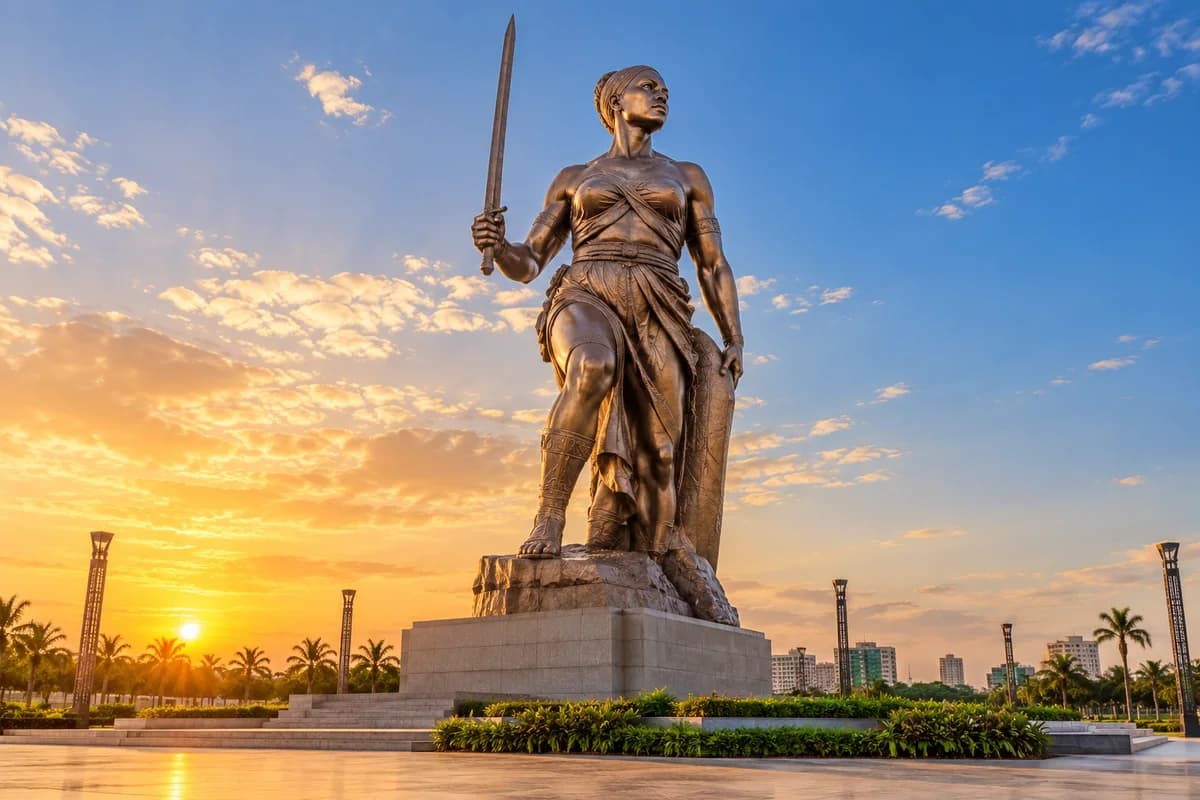
Facing the ocean, the Amazon statue is 30 metres high and weighs about 150 tonnes. Unveiled on 30 July 2022, it honours the agojie, also known as Mino, the women warriors of the kingdom of Danxomè. It has become one of the new symbols of Cotonou.
History of the Amazon statue
The Beninese government approved the project on 17 July 2019. Its aim was to give the country a strong symbol of identity, in tribute to the Amazons of Danxomè.
The work was entrusted to the Chinese artist Li Xiangqun, through the company Beijing Huashi Xiangqun Culture and Art. It consists of a metal frame clad in bronze.
President Patrice Talon unveiled the monument on Saturday 30 July 2022. Since then the esplanade has been open to everyone, Beninese and foreign visitors alike.
The agojie, women warriors of Danxomè
The statue honours an all-female military corps known as the agojie (or Agoodjié) and the Mino. It existed in the kingdom of Danxomè until the end of the nineteenth century.
According to the Beninese government, the corps dates back to the reign of Queen Tassi Hangbè (1708-1711). It was later reorganised under King Guézo (1818-1858).
These warriors are also known as the “Amazons of Dahomey”. The monument takes up that name and, for the government, embodies the bravery of Beninese women.
What to see
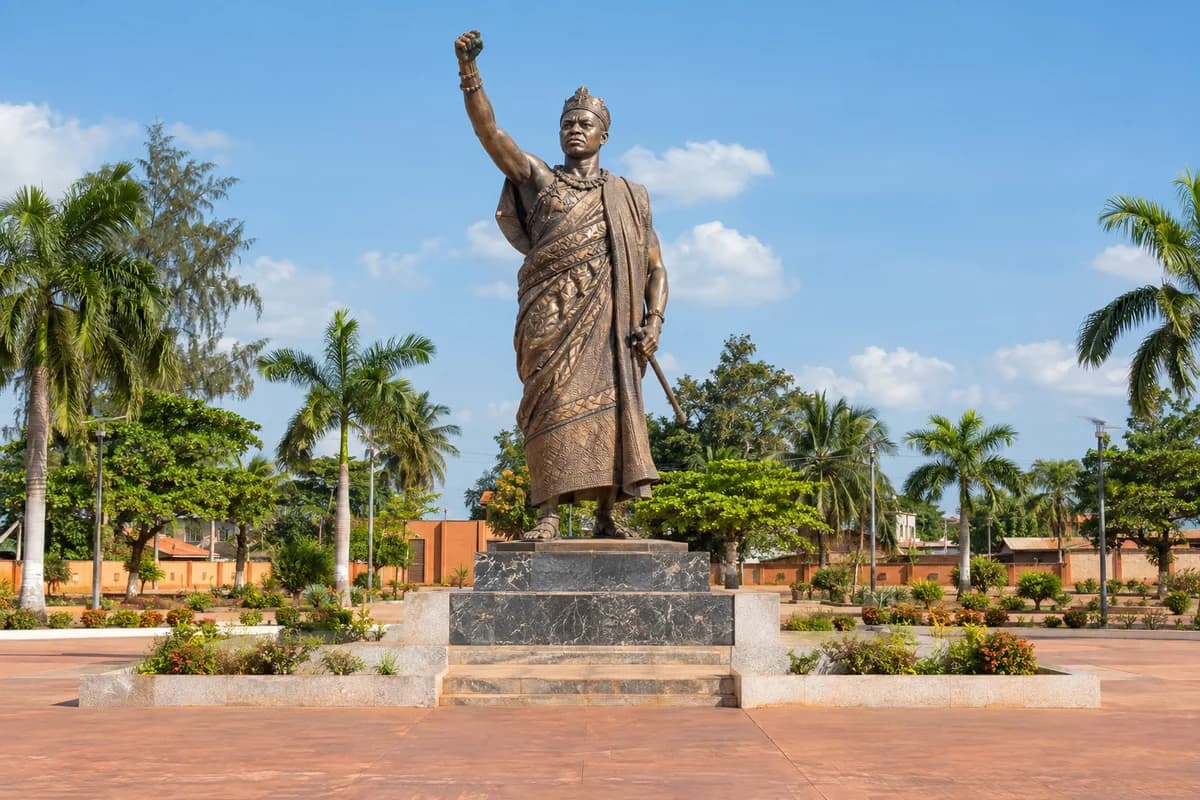
The statue depicts a young woman warrior armed with a rifle and a sabre, her head raised as a sign of victory. It stands 30 metres high without its plinth.
It rises from a terrace on the Esplanade des Amazones, between the Boulevard de la Marina and the Atlantic Ocean. The site lies behind the Marina Palace, between the Port of Cotonou and the Palais des Congrès.
- The statue and its plinth, visible from far along the boulevard.
- The landscaped esplanade, a place to stroll by the sea.
- The Boulevard de la Marina, redeveloped as part of the renewal of Cotonou.
Meaning and memory
At the unveiling, President Talon described the statue as the image of “the Beninese woman of yesterday, today and tomorrow”. He recalled that women, as much as men, had distinguished themselves through their bravery and had “broken the myth of the weaker sex”.
According to the government, the project aimed to give Benin a strong symbol of identity and a new visual identity. The work carries forward the legacy of Queen Tassi Hangbè and King Guézo and recalls the historical bravery of Beninese women.
The Minister of Culture, Jean-Michel Abimbola, stressed that the statue's face, posture and weapons express the courage of these historical figures.
The monument is part of a broader policy of showcasing national history in public space. It gives the memory of the agojie a visible place at the heart of the economic capital.
Planning your visit
The Esplanade des Amazones is a public space open to all, reached by car, motorbike or bus from the Boulevard de la Marina. It lies close to the Marina Palace, the presidential residence: follow the instructions of security staff, particularly regarding photographs. Please keep the site clean. No official opening hours are published online.
Opening hours and prices can change: check locally or with the tourist office before you go.
Sources
- Gouvernement du Bénin : À la découverte du Monument Amazone, boulevard de la Marina
- Banouto : Statue de l'Amazone, femme béninoise d'hier, d'aujourd'hui et de demain (1er août 2022)
- BellaNaija : Benin's 30m-tall Amazon statue honours the women warriors of Dahomey (août 2022)
- Wikipédia : Monument Amazone
- Wikipédia : Esplanade des Amazones
Checked in September 2026.