The place of Benin in ECOWAS and in the African Union explains much of the country's foreign policy. As a founding member of both organisations, Benin champions regional integration, free movement and collective security. This guide reviews its commitments, what they mean in daily life and the latest developments.
A founding member of ECOWAS
The Economic Community of West African States was founded in Lagos on 28 May 1975. Dahomey, which took the name Benin a few months later, was one of the fifteen states that signed the treaty. Later, in July 1993, Cotonou hosted the signing of the revised treaty, which extended the organisation's mission to peace, security and governance. Since then, Benin and ECOWAS have shared half a century of common history.
Today, ECOWAS has twelve member states, following the withdrawal of Burkina Faso, Mali and Niger, which took effect in January 2025. In addition, its headquarters are in Abuja, Nigeria, home to the Commission, the Parliament and the Community Court of Justice. By contrast, the ECOWAS Bank for Investment and Development operates from Lomé.
What ECOWAS changes in daily life
For citizens, the presence of Benin in ECOWAS has very practical effects. First, the 1979 protocol on free movement allows a national of one member state to enter another without a visa, for a stay of up to 90 days. All that is needed then is a valid travel document, such as a Beninese passport.
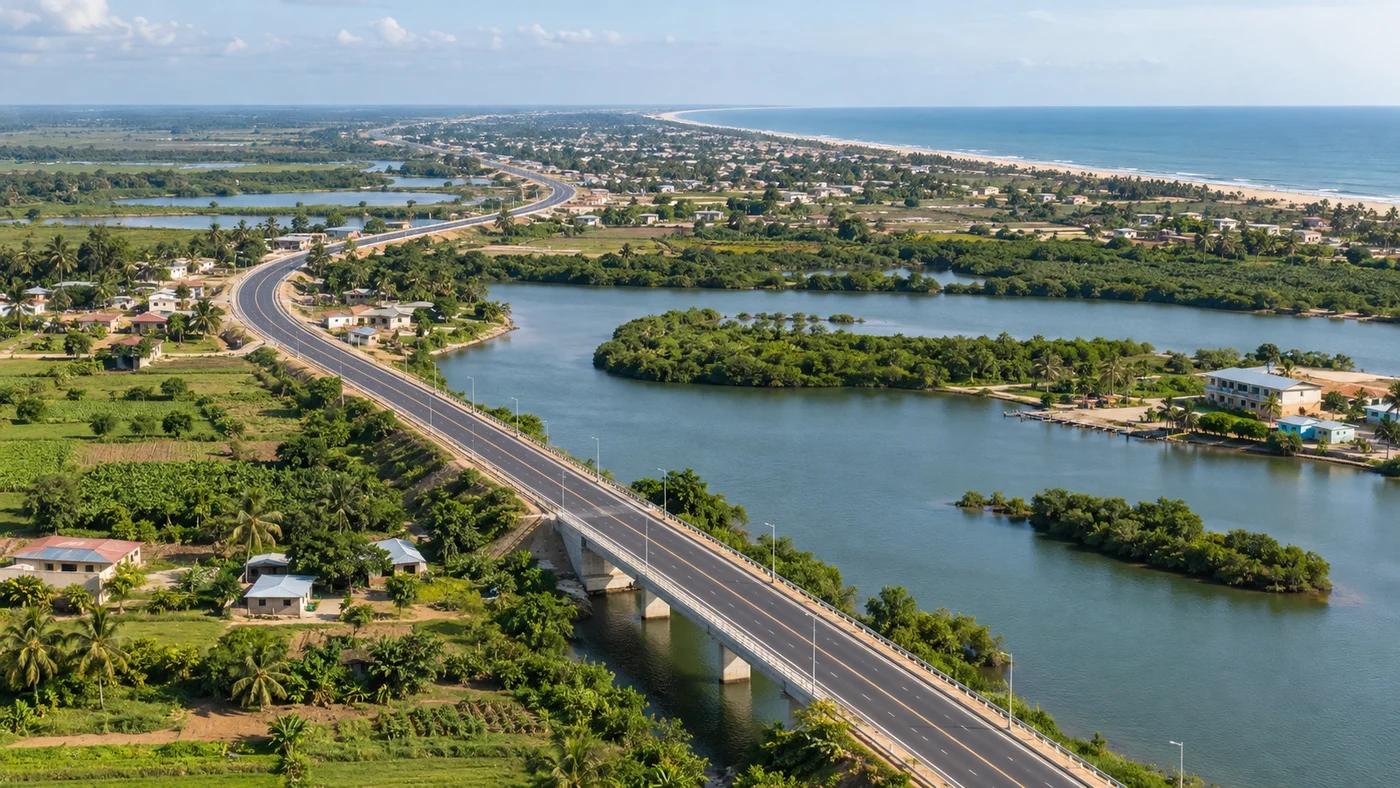
Next, trade benefits from a common external tariff, applied since 2015, and from a scheme that liberalises trade between member states. As a result, the port of Cotonou serves as a gateway for several neighbouring countries. Finally, major regional projects, such as the Abidjan-Lagos road corridor, cross Beninese territory.
Note, however, that these benefits apply only to citizens of member states. A Belgian traveller therefore needs a visa before departure, in most cases an e-visa.
Regional security: Benin and ECOWAS in times of crisis
The 2001 protocol on democracy and good governance commits states to respect constitutional order. After the July 2023 coup in Niger, Benin thus applied the sanctions decided by the organisation, including the closure of the border. ECOWAS lifted these sanctions in February 2024, but the border stayed closed on the Nigerien side. In June 2026, the two countries set up a joint committee to examine the conditions for reopening it.
Benin has also received regional support itself. On 7 December 2025, an attempted coup failed in Cotonou. ECOWAS then announced the deployment of elements of its standby force from Nigeria, Ghana, Côte d'Ivoire and Sierra Leone to support the institutions.
Benin in the African Union
At continental level, Dahomey was among the countries that founded the Organisation of African Unity in Addis Ababa on 25 May 1963. Then, in 2002, the African Union succeeded the OAU. President Thomas Boni Yayi chaired the organisation in 2012. Moreover, Benin signed the African Continental Free Trade Area agreement in Niamey on 7 July 2019.
On 11 February 2026, the country won a seat on the AU Peace and Security Council for the period from April 2026 to March 2028. It also holds the Council's rotating chair in September 2026. In that capacity, Foreign Minister Corinne Amori Brunet chaired a ministerial meeting in New York on good neighbourliness in the fight against terrorism. Our article on the September 2026 diplomatic agenda covers this sequence.
WAEMU and other regional frameworks
Alongside the role of Benin in ECOWAS, the country belongs to the West African Economic and Monetary Union (WAEMU, or UEMOA), created in Dakar in January 1994. It therefore shares a common currency with its neighbours, the CFA franc, issued by the BCEAO. For practical tips, see our guide to the CFA franc in Benin. The country has also been a member of the Council of the Entente since its creation in 1959.
Frequently asked questions
Has Benin left ECOWAS?
No. Benin remains a member of ECOWAS. Only Burkina Faso, Mali and Niger, grouped in the Alliance of Sahel States, left the organisation in January 2025.
Does a Beninese citizen need a visa within ECOWAS?
No, not for a stay of up to 90 days in another member state. However, a valid passport or travel document must be shown at the border.
What is the role of Benin in ECOWAS today?
Indeed, the country takes part in decisions of the Authority of Heads of State and contributes to regional security mechanisms. It also supports infrastructure projects linking the ports of the Gulf of Guinea to the hinterland.
Does Benin sit on the AU Peace and Security Council?
Yes, from 1 April 2026 until 31 March 2028. In September 2026, it also holds the Council's rotating chair.
These commitments go hand in hand with bilateral ties, including cooperation between Belgium and Benin. For any question about your travel documents, Honorary Consulate of Benin in Liège can help through our contact page, while our embassies page lists Benin's diplomatic network.
Sources
- ECOWAS: official presentation of the Community
- African Union: list of member states
- La Nouvelle Tribune: Benin elected to the Peace and Security Council (February 2026)
- Jeune Afrique: ECOWAS deploys its standby force in Benin (December 2025)
Article tags